Your cart is currently empty!
Author: admin
-
Are LICHENS Bad For Trees?
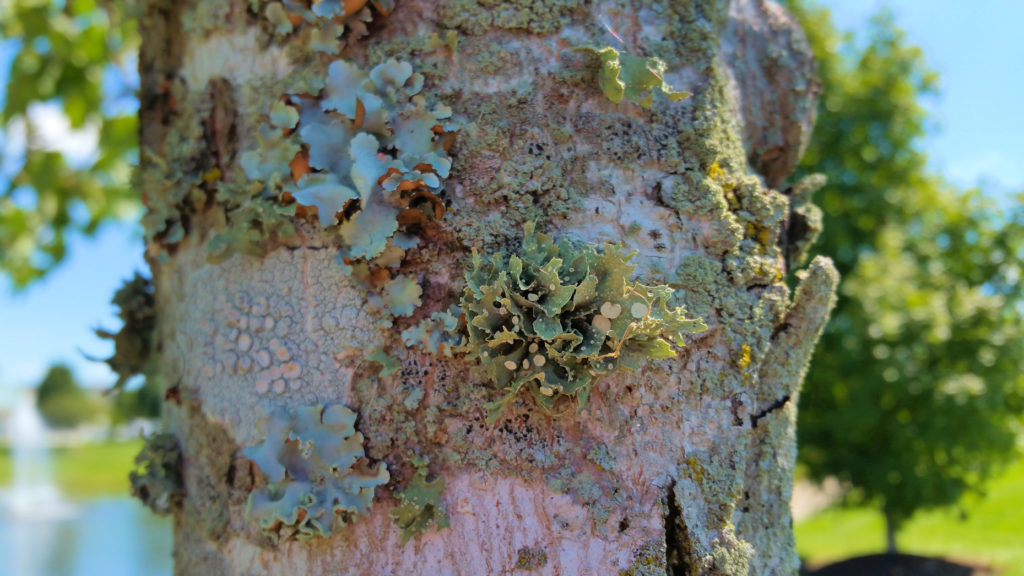
“I’ve got some kind of creepy fungus all over my tree! Will it kill my tree?”
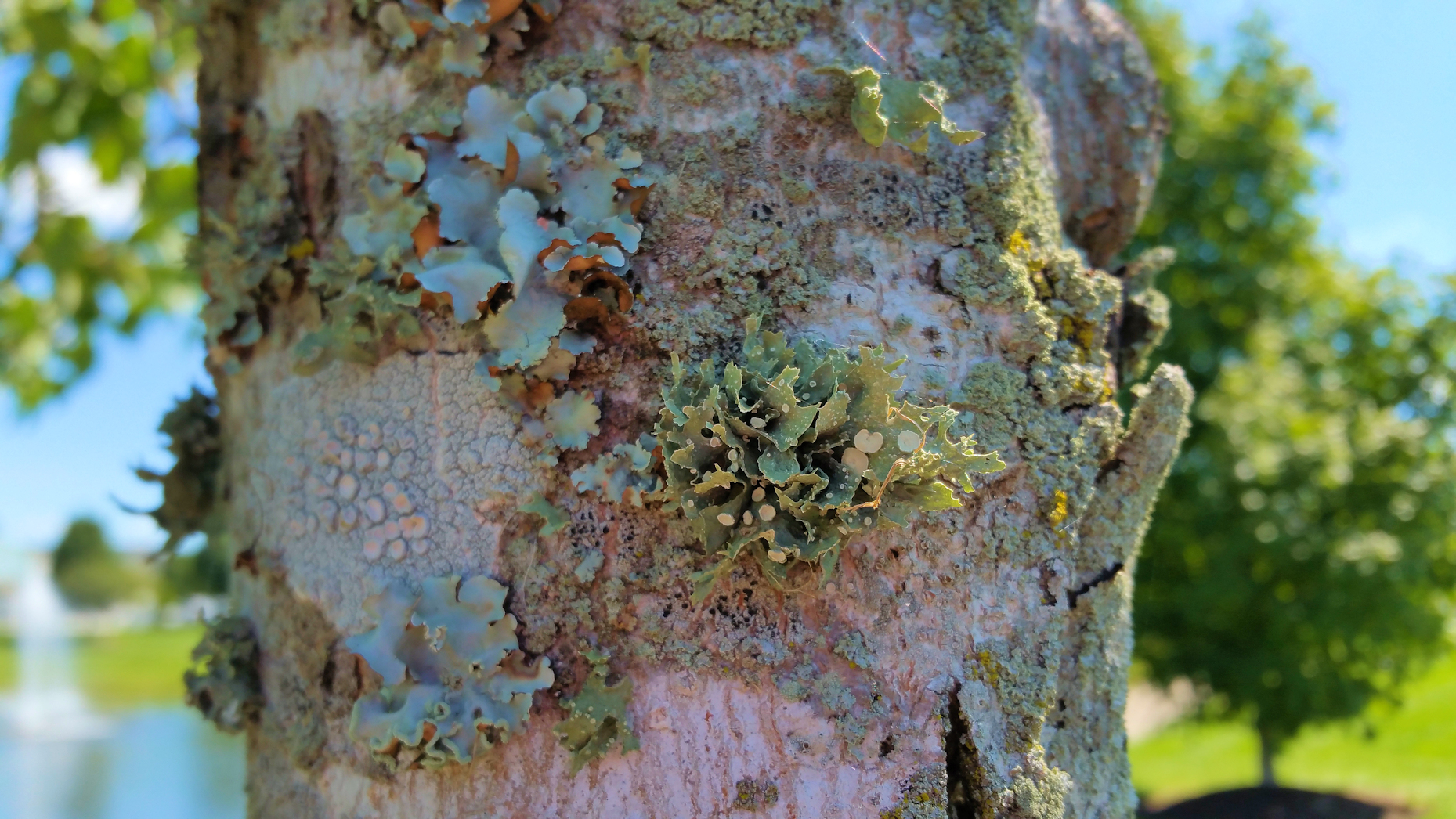
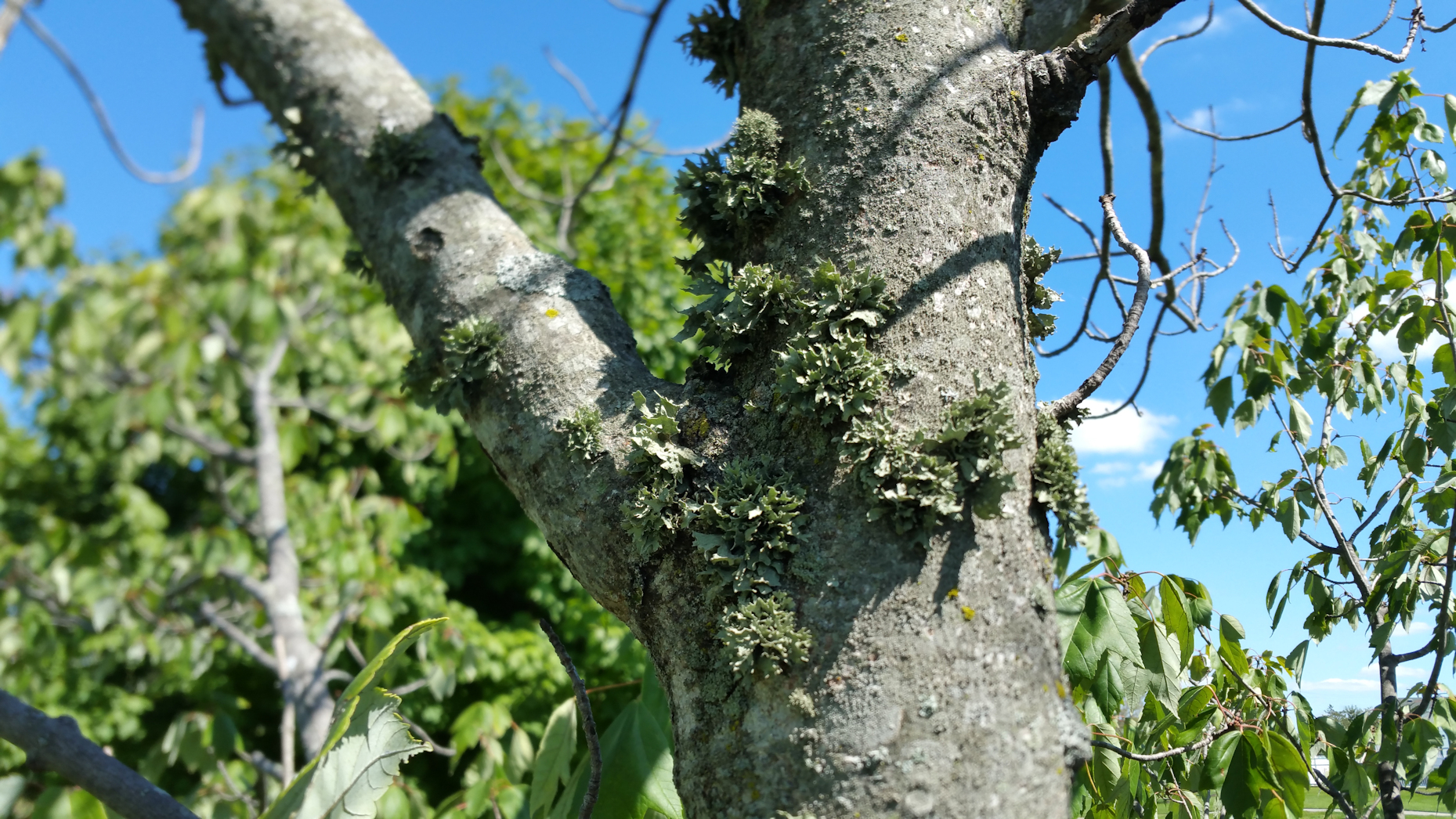
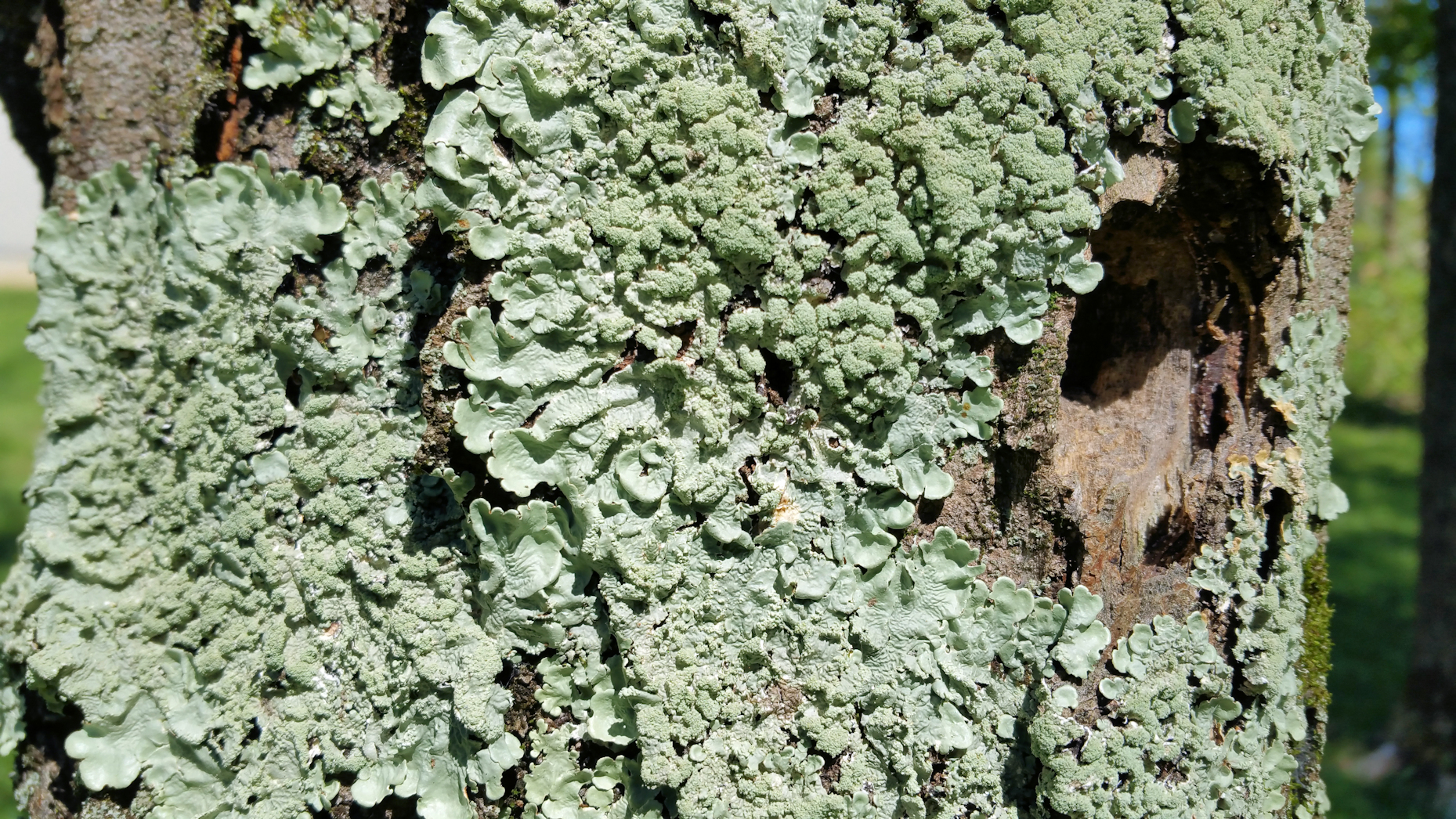
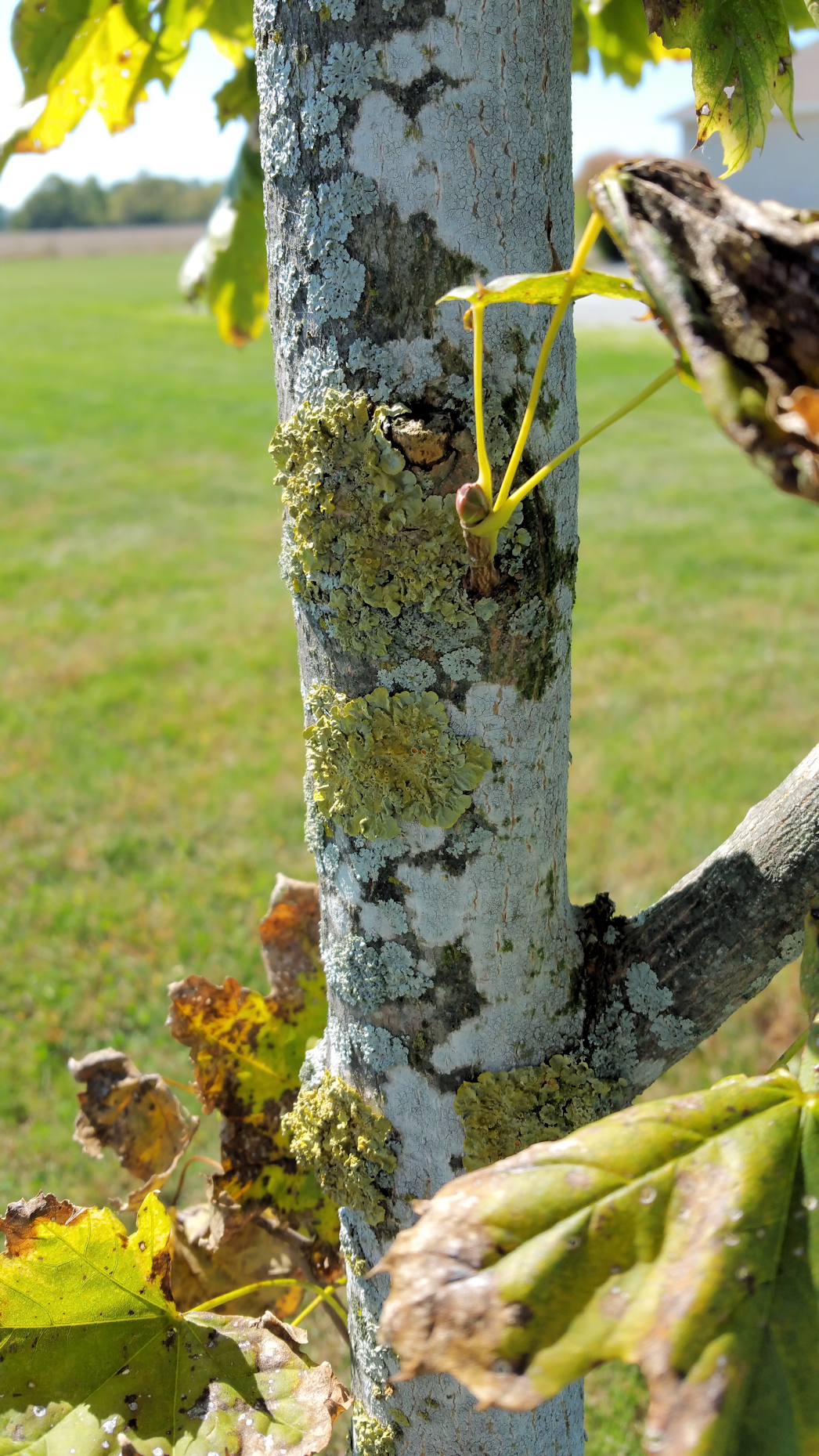
I get asked this A LOT. And so, I’ve created this post to offer a brief, but hopefully interesting discussion about the fascinating natural phenomena known as LICHENS (pronounced: “lye-kens”). More field photos below and you’ll find links to additional information near the bottom of this page.
But let’s first address the question concerning ARE LICHENS BAD FOR TREES?
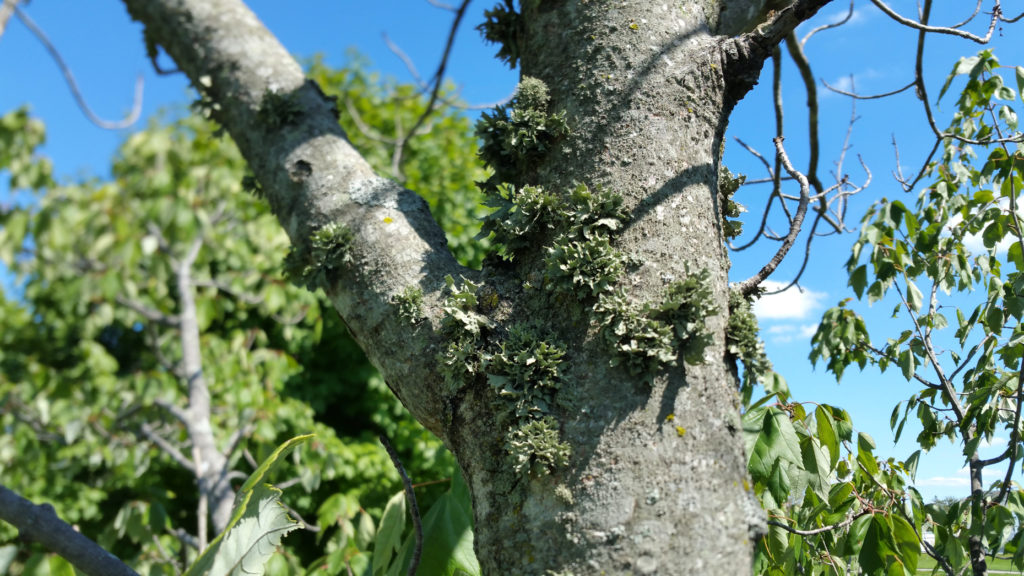
The answer is “NO“
…they have not been shown to pose any significant harm to trees. Now you may breathe a sigh of relief!
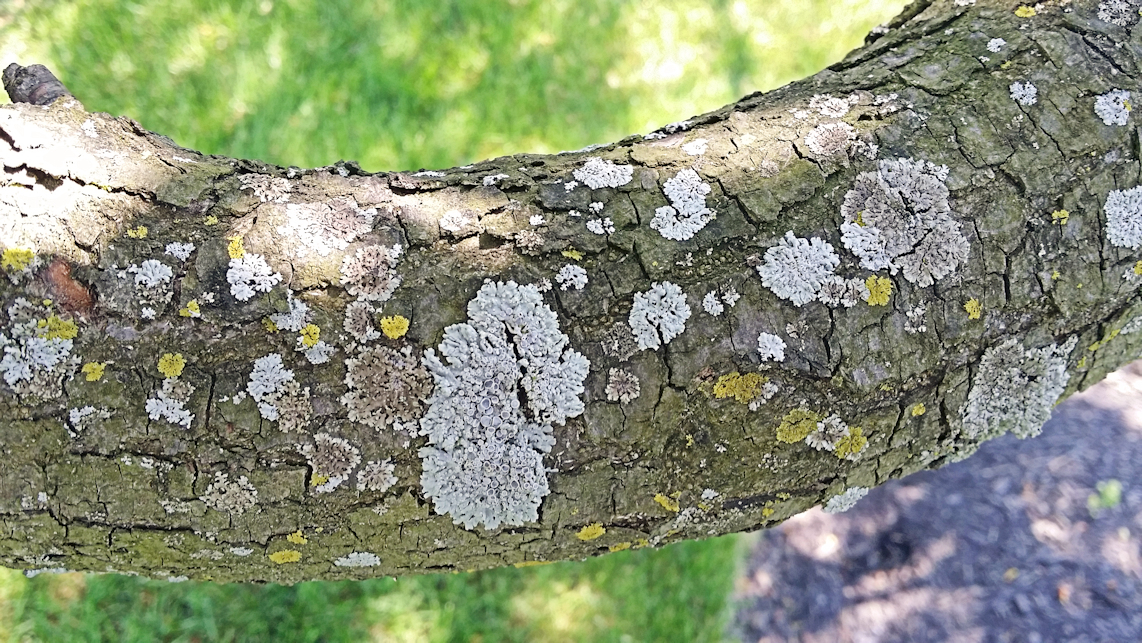
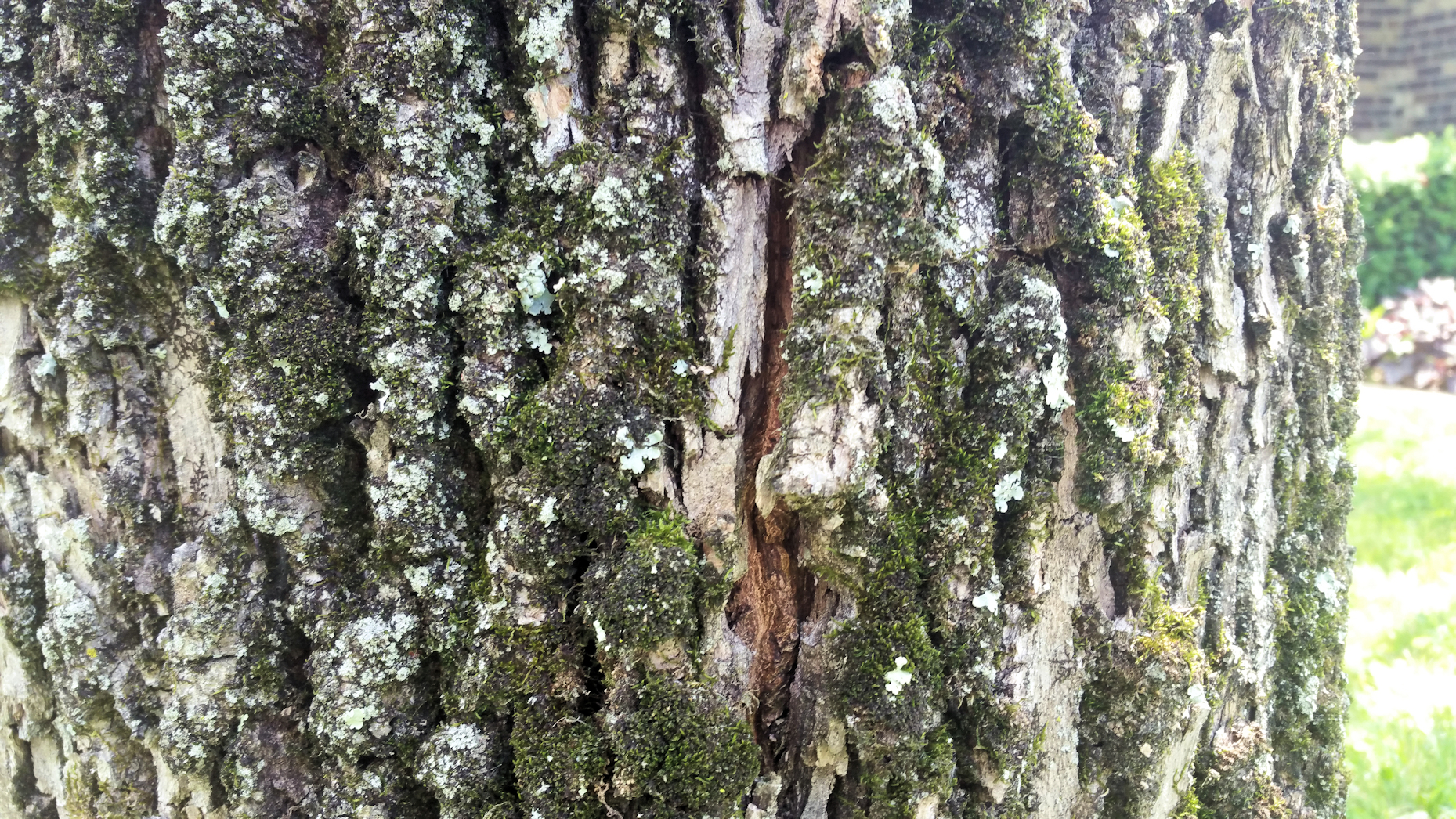
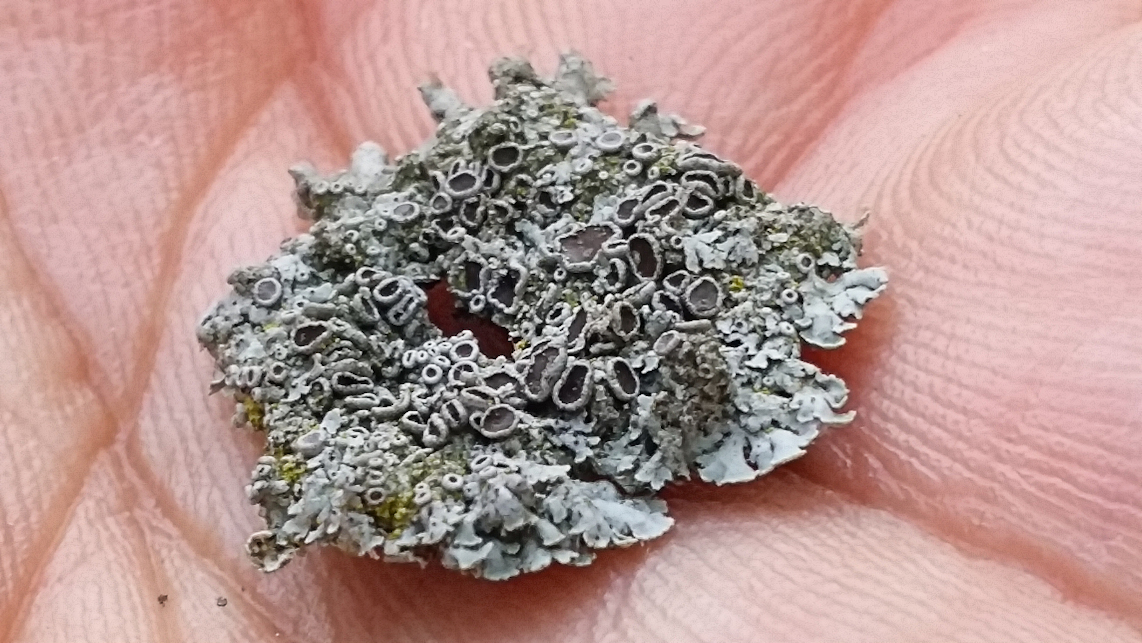
Lichens are greenish, sometimes lettucy-looking, symbiotic growths made of fungi, yeast, and two types of algae. These grow as an interwoven mass appearing as a single individual which can develop into a sizeable “community” of lichens. Both the fungus and the alga provide something essential to the other for their survival but are not harmful to plants.
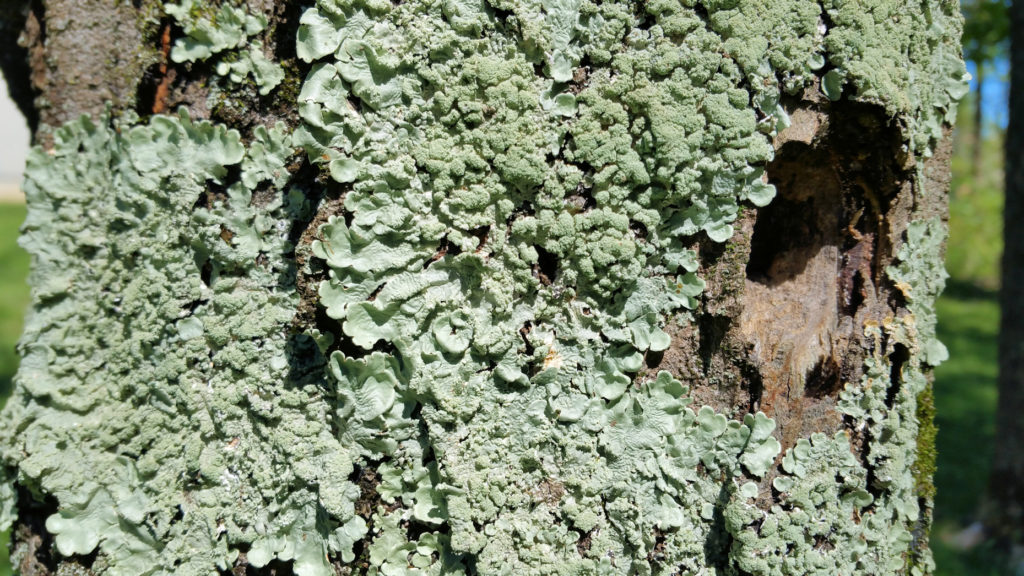
“But, WHY,” you may ask, “are these things growing on my tree(s)?”
Actually, they do not specifically pick on trees. Lichens can develop and grow on just about any stationary surface they can attach to, such as rocks, roofs, fence posts, gravestones, and even other lichens! And you can find lichens just about anywhere! As a matter of fact, there are an estimated 20,000 known species of lichens worldwide and come in a variety of colors, shapes, and sizes! They can grow flat or with a leafy lettuce appearance or other interesting (and sometimes gross-looking) structures. An increased amount of lichen on plants could indicate poor plant health because healthy, fast growing trees and shrubs are always shedding bark, making it difficult for lichen to attach. A season or more of severe drought, for instance, can slow a tree’s development allowing more time for lichens to form and populate.
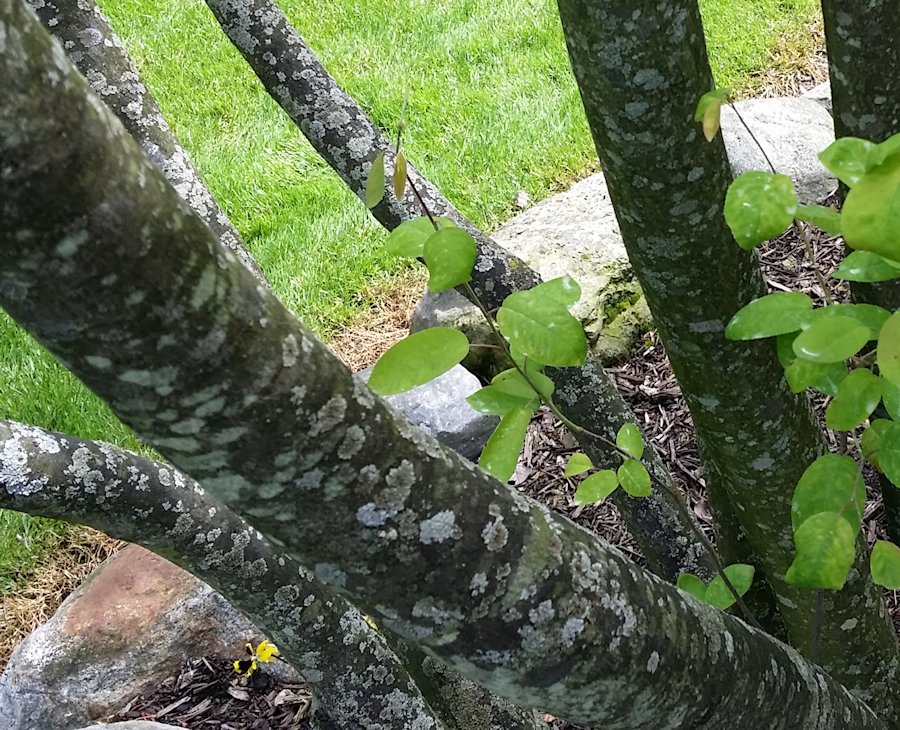
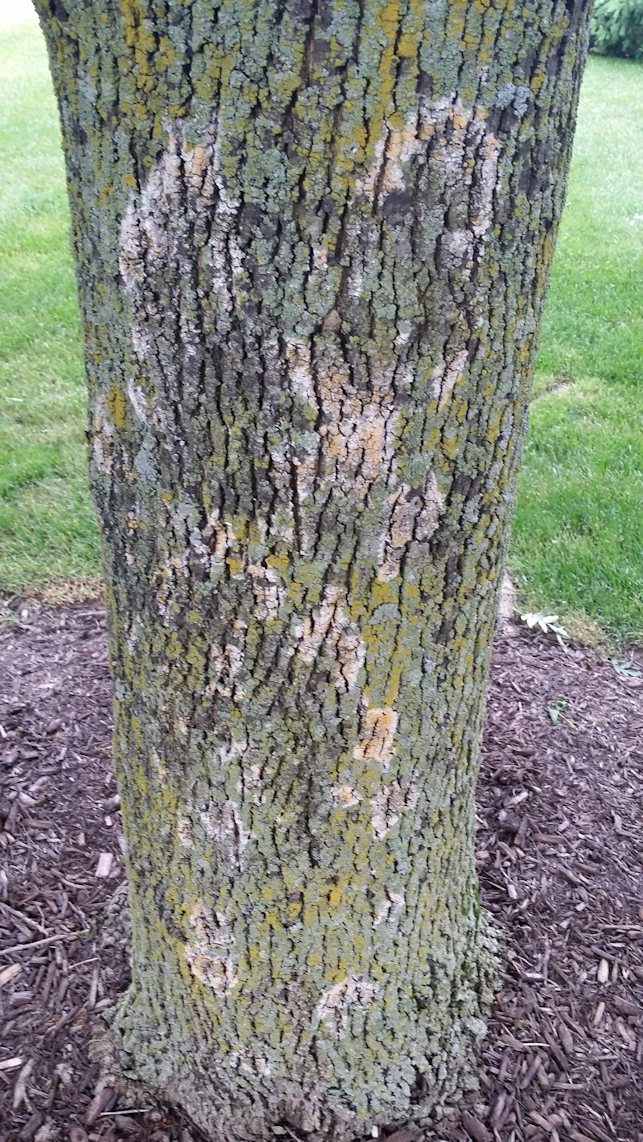
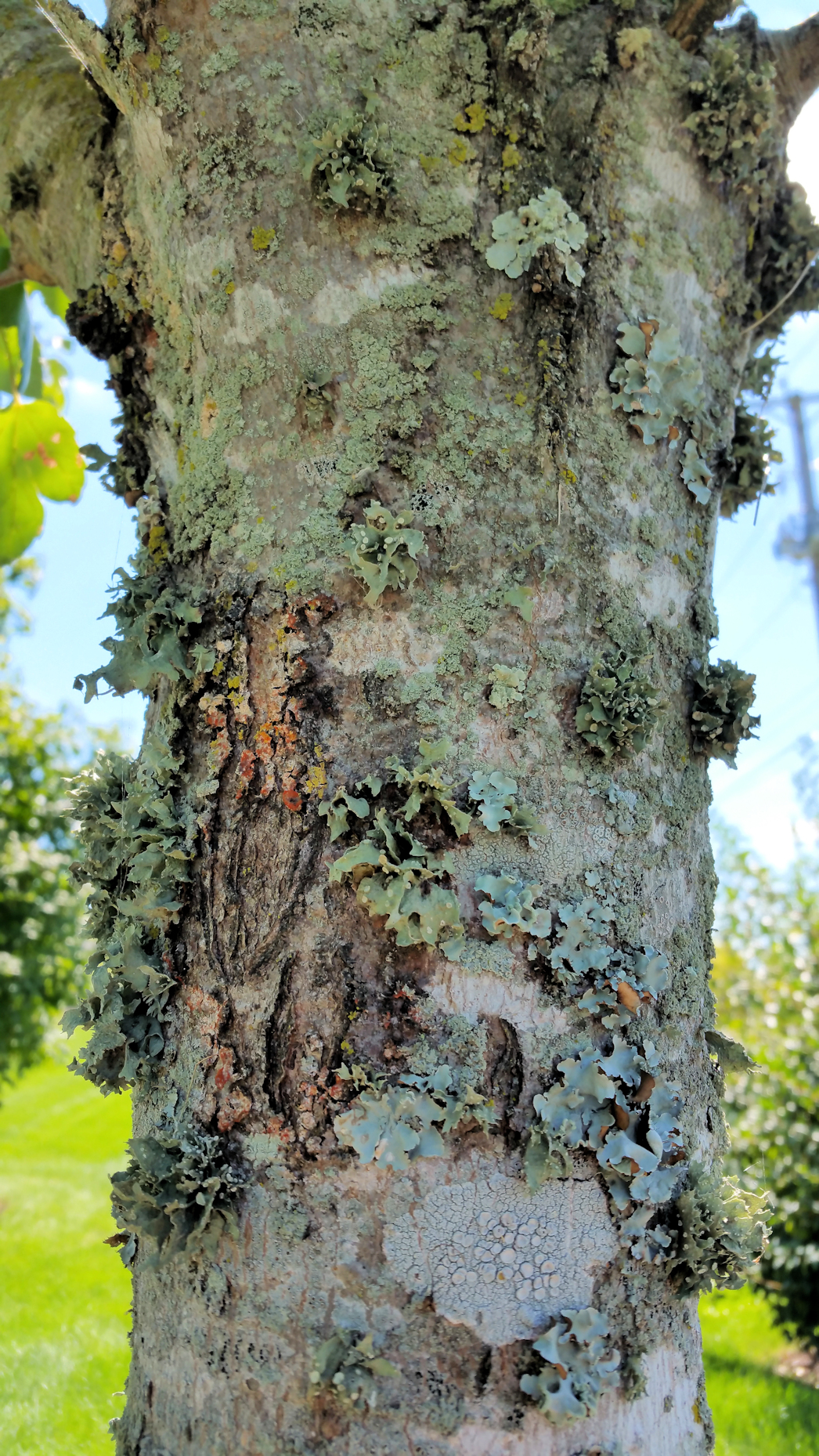
Check out the photos of various lichen on different trees. (Note: The type of tree does not necessarily affect the type of lichens that grow on them.)
Lichens on Sugar Maple. 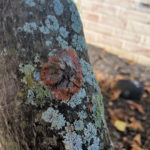
Lichens on Magnolia. 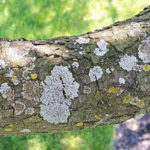
Lichens on Crabapple. 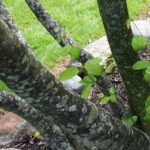
Lichens on Serviceberry. 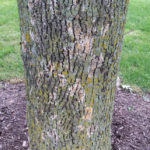
Lichens on White Ash. 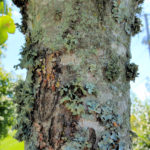
Lichens on Red Maple.
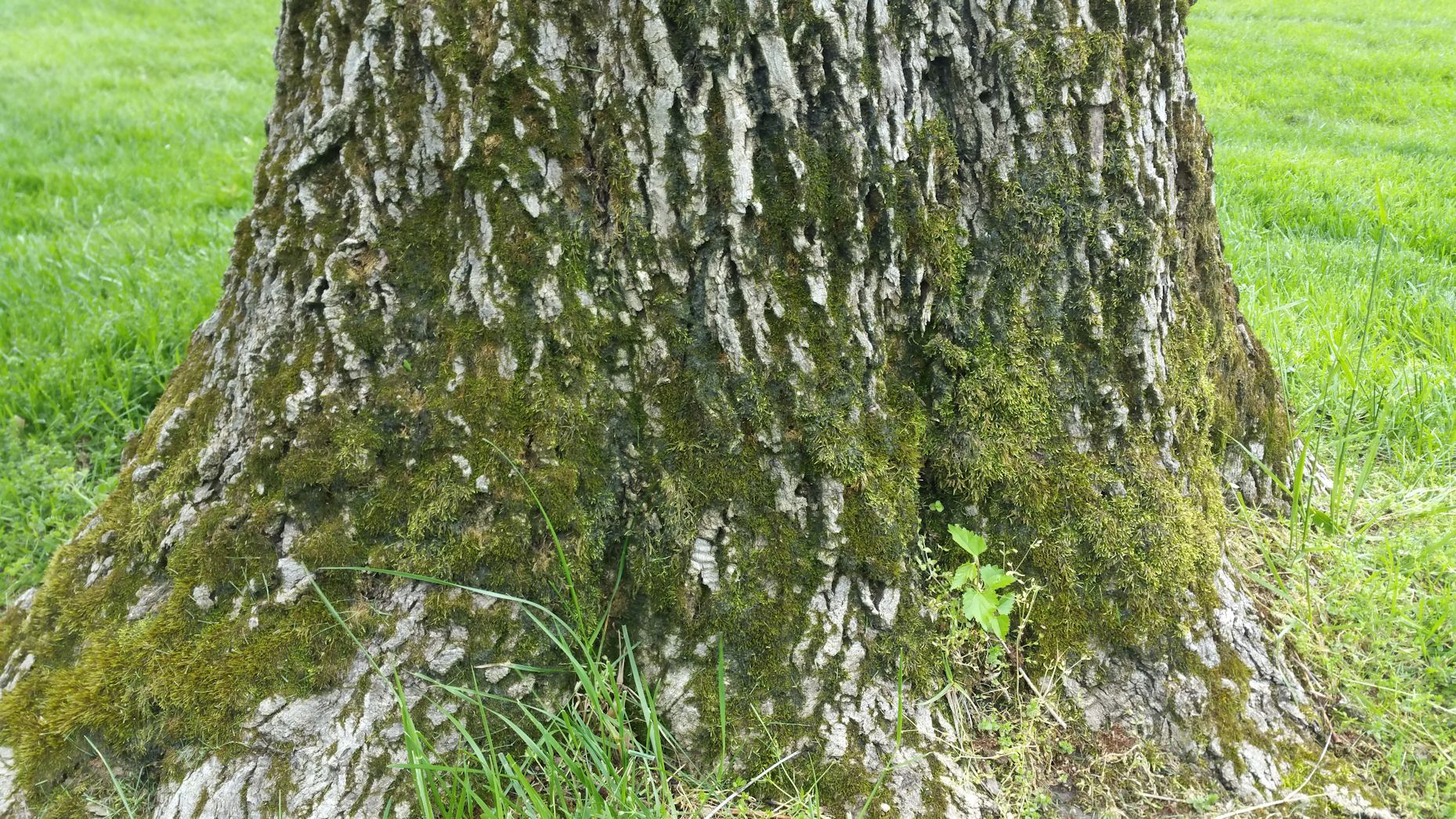
Moss is not lichens.
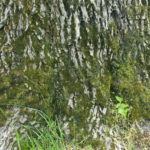
Moss on White Ash.
Lichens atop moss.
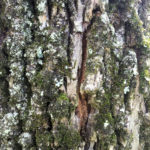
Lichens on moss on ash. Hey! Are You “Lichen” What You See? LEARN MORE About Lichens Below!
- Lichens of North America – (Sharnoff’s photographic fieldwork) -This website grew out of the activities of Sylvia and Stephen Sharnoff, who did the photographic fieldwork for the book Lichens of North America, by Irwin M.Brodo and the Sharnoffs, published in November 2001 by Yale University Press.
- Lichen – (Encyclopædia Britannica) -Lichen, any of about 15,000 species of thallophytic plantlike organisms that consist of a symbiotic association of algae (usually green) or cyanobacteria and fungi (mostly ascomycetes and basidiomycetes). Lichens are found worldwide and occur in a variety of environmental conditions. A diverse group of organisms, they can colonize a wide range of surfaces and are frequently found on tree bark, exposed rock, and as a part of biological soil crust. Lichens have been used by humans as food and as sources of medicine and dye. They also provide two-thirds of the food supply for the caribou and reindeer that roam the far northern ranges.
- What Are Lichens? – (Live Science) – A lichen, or lichenized fungus, is actually organisms functioning as a single, stable unit. Lichens comprise a fungus living in a symbiotic relationship with an alga or cyanobacterium (or both in some instances). There are about 17,000 species of lichen worldwide.
- What Lichens Are Not – (USDA Forest Service) – Isn’t lichen that mossy stuff on rocks and trees? When people think of lichens, many of them think of them as a kind of moss. That could not be farther from the truth.
- Yeast Emerges as Hidden Third Partner in Lichen Symbiosis – (ScienceDaily) – For nearly 150 years, lichens have been the model organisms of symbiosis. Now researchers have uncovered an unexpected third partner embedded in the lichen cortex or ‘skin’ — yeast.
-
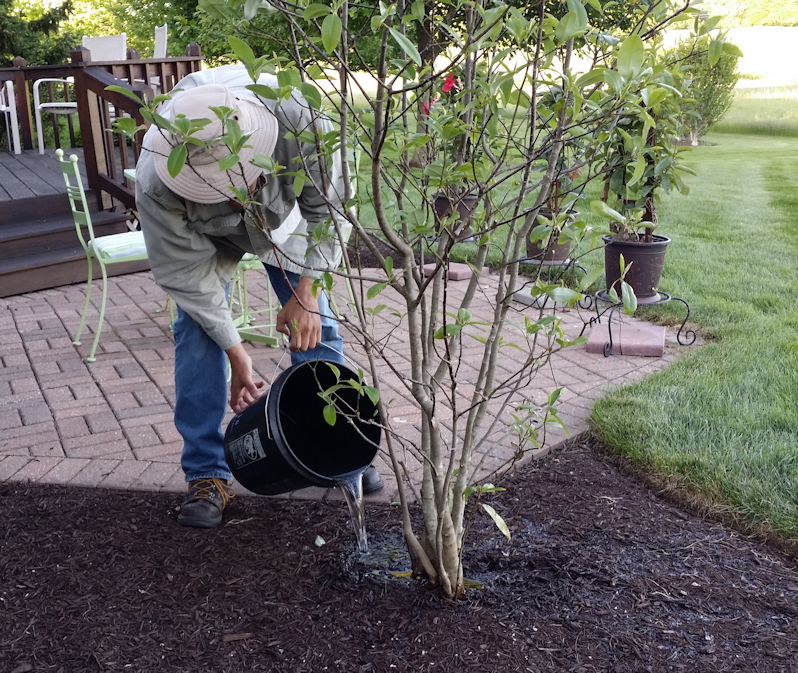
Watering Trees – How Much?
Providing adequate water for your trees can be a challenge sometimes because it means you have to:- remember to do it,
- know when & how much to do it,
- and do it in a way that doesn’t discourage you from doing it.
In this post, I hope to provide you access to some good watering tips that may make irrigating your trees easier and less inconvenient to do when you do it. Keep in mind that watering trees is based on each tree’s needs and not necessarily on a schedule. What does that mean? Well, if you have an in-ground irrigation system, chances are it is programmed to water your lawn/landscape at specific times or intervals. Have you ever driven through a neighborhood when it was raining outside and saw someone’s irrigation system sprinkling the lawn? Yep. That’s watering on a schedule and not on needs. So, you will have to physically go out into your landscape (or persuade/hire someone else to do it) to check the soil moisture of your most valued plantings, if you are interested in the best care for them.The most susceptible plants to succumb to heat & drought stress:- New transplants (less than 3 years)
- Improperly planted (too deep, unremoved burlap & wire, etc.)
- In or near heat islands (parking lots, roadways, etc.)
- In non-irrigated and upper slope sites
- Unplanted stock (containerized, balled & burlapped, etc.)
- Anywhere where sufficient hydration is lacking
First, here are links to a couple of “how-to” videos by Lindsey Purcell (Urban Forestry Specialist at Purdue University) on how to select quality trees and how to properly plant and care for them. These videos are loaded full of the latest research and industry practices derived from decades of research (and trial & error) from the tree care industry.*In the second video, Lindsey offers a tip on how you can quickly calculate how much you should water your tree. (That discussion begins exactly 5:00 minutes into his video and he describes the “5 x 5” Rule.).
 Methods and opinions on how frequently and how much to water will vary a bit depending on who you ask, but I’ve found they all generally lead to about the same results and your trees won’t question you on the difference anyway! And so, whether you use an in-ground irrigation system, or attach a sprinkler head to a garden hose, or fill up buckets of water with a hole at the bottom to sit at the base of your trees allowing the slow trickle to reach a lot of the absorptive roots located there, there are many ways to get water to tree roots. Use the method that best suits your time and circumstances. Adding mulch (about 2″ – 4″ deep non-compacted) can help retain moisture and save you a lot of repetitive watering time, but be sure not to pile up mulch against the trunk and flare to minimize decay, rot and girdling roots around the trunk and root flares.
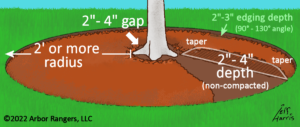 Another watering system setup you could try is installing soaker hoses, which can be found very inexpensively in most home & garden stores, Lowe’s, Home Depot, Walmart, Target, etc., even Amazon. Get the length that best suits the needs of your trees. Let the hose encircle your tree, about 8″-10″ away from the base of the trunk flare. You can have it wrap around in a circle more than once, like a cinnamon-swirled pastry, to provide water more quickly to the area. Secure the hose so it doesn’t bunch upon itself by using small stakes to separate each loop of the hose or try using sod staples. Leaving the soaker hose in place all season will make it so you only have to attach your garden hose to it when it’s time to water your tree(s) during the growing season. You conceal the soaker hose by simply adding a light layer of mulch atop it.
CAN YOU WATER A TREE TOO MUCH?Yes. And that can be just as bad for your trees as not watering them enough. Tree roots need oxygen and too much water over a period of time could suffocate them and eventually lead to a root rot problem. Therefore, in following any of the watering methods discussed previously, be sure to only water according to the needs of your trees which includes checking the soil moisture BEFORE applying additional water. It’s okay to have a schedule, but the schedule is to CHECK soil moisture and If the soil is already moist, then DO NOT apply additional water.
Reminders:- MULCHING AROUND TREES – Don’t forget that you need to check the mulch at least annually to monitor for new girdling roots, etc. (See: “Girdling Roots: The Silent Tree Killer”) Some soaker hose manufacturers may recommend removing them before winter’s freezing temperatures arrive because moisture retained in the hose may cause it to crack. Therefore, you may have to remember to reinstall the soaker hose the next spring.
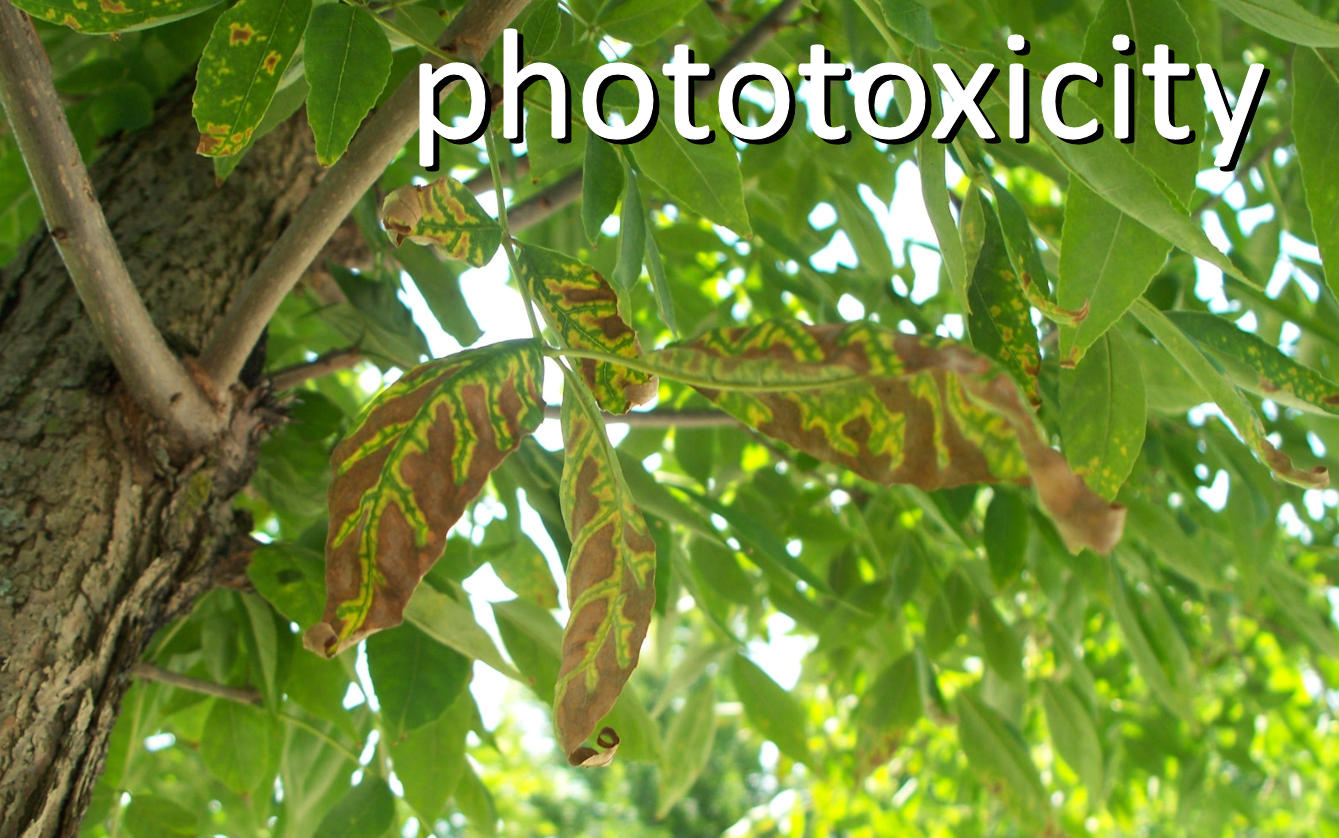
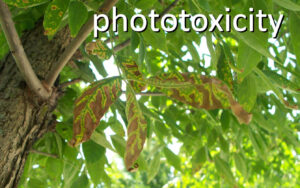
- TREE TREATMENTS – If your trees are to receive (or recently received) any treatments to provide supplementary nutrients or to suppress insect pests infestations or disease infections, etc. then you need to ensure you provide them adequate water. This can help to reduce the potential for phototoxicity injury. [Note: Many pesticide labels caution applicators not to use their products when temperatures exceed 89°F (31.6°C). These also carry temperature precautions for storing chemicals.]
 I hope these watering tips help you in maintaining your landscape & property trees!
For even more great tips in managing your trees, we endorse the publication “Tree Owners Manual” made by the USDA Forest Service.Related articles:- “Heat & Drought Stress – Will Your Trees Survive?”
- Estimating Tree Water Requirements
- Watering Schedule example from the City of West Sacremento
-
How Soil Tests Can Help with Tree Selection
[Last update: November 2025]
Quick Links to Topics Covered in This Article:
INTRODUCTION • 17 Essential Elements
Using the Soil pH Chart • How a Soil Analysis Report Can Help You
How To Get Your Soil Tested
INTRODUCTION
Have you ever gone to a tree nursery and, to your glee, found what you thought to be the PERFECT tree for your home? Perhaps you saw it first in a magazine, on TV, or online, or maybe even caught it on sale at your local Walmart or Home Depot. Wherever you saw it, you impulsively purchase it for your property. In no time, you’ll have it in the ground and be taking selfies with it to brag to all your friends on social media!
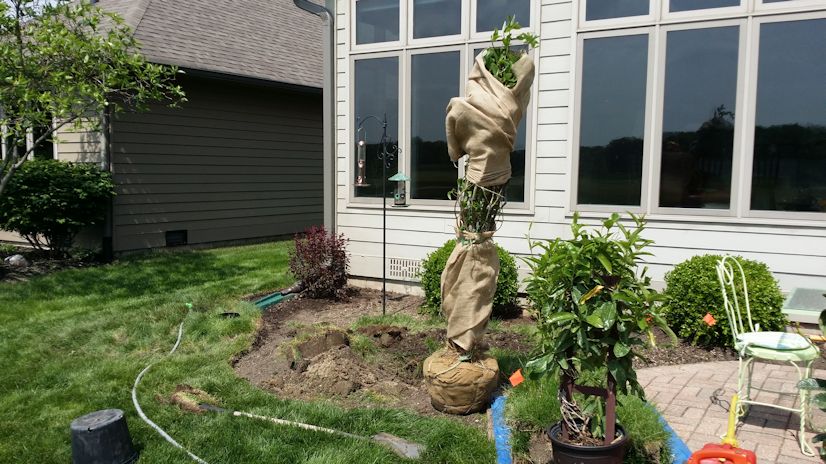
After a few weeks, months, or years go by, you begin to notice it’s not looking as nice as it did when you planted it. “What happened? Why is it looking so sickly?” you wonder.
The 17 Essential Elements
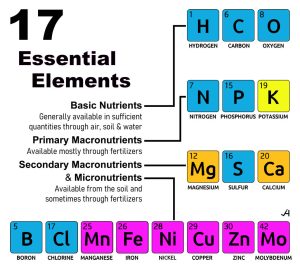
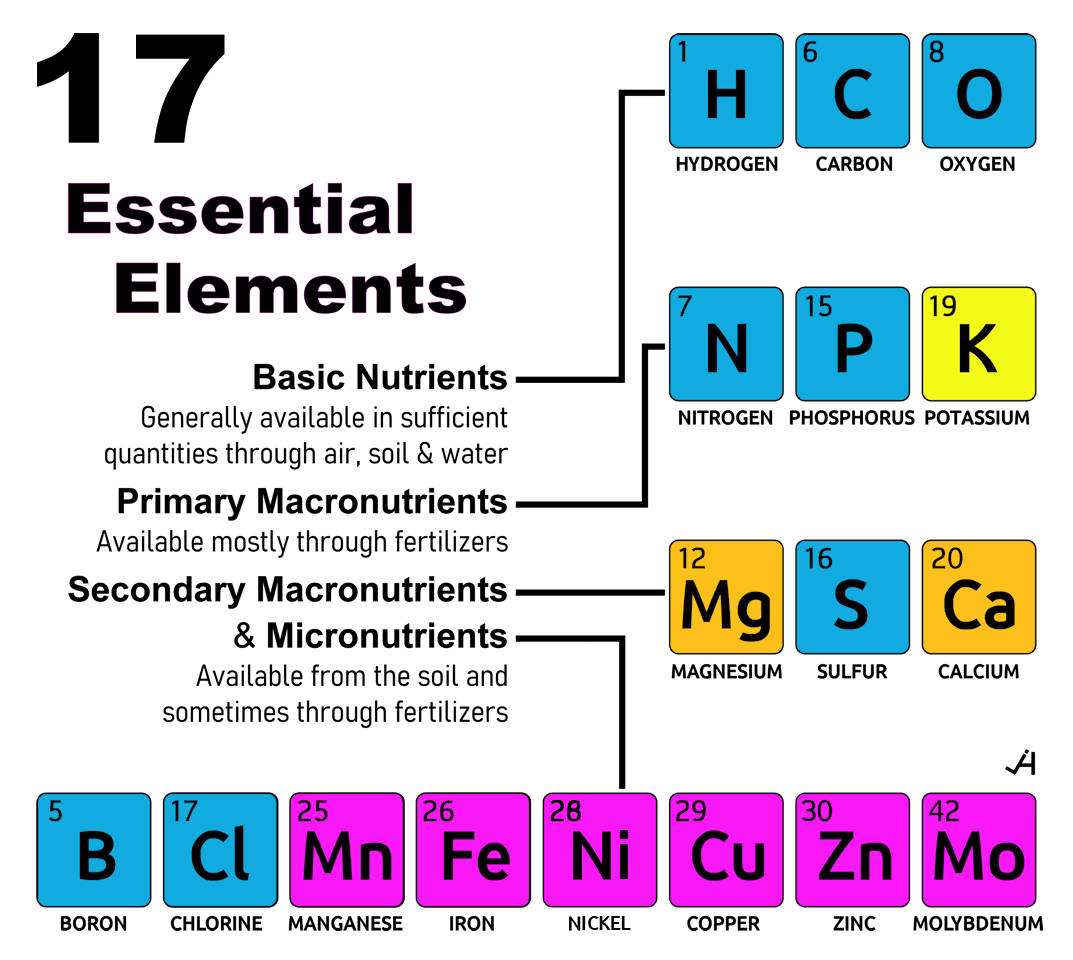
The 17 essential elements that plants need to survive. Like most living organisms, a lack of any vital nutrients can have a negative health impact. Your trees are living organisms. Trees exhibit all the characteristics of life, such as growth, reproduction, responsiveness to their environment, and metabolism. They are made of cells, take in nutrients and water, and perform respiration and excretion. Therefore, KNOWING your soil can also help you to understand why existing trees may be failing in health. A soil analysis can help guide you to improve your soil management.
There are 17 essential elements for trees, based on the amounts needed, which are obtained from air, water, and soil, and are divided into macronutrients and micronutrients. Macronutrients are required in large amounts, while micronutrients, though needed in smaller quantities, are equally critical for survival and healthy growth.
- Basic Nutrients (Basic Macronutrients)
These non-mineral elements are primarily supplied by air and water, rather than the soil.- Hydrogen (H): Comprises about 6% of a tree’s dry weight. Acquired from water, it is a key component of carbohydrates and other organic compounds that are essential for growth.
- Carbon (C): Makes up about 45% of a tree’s dry weight. It is the foundation of all organic molecules and is used by trees to produce carbohydrates (a.k.a., sugars and starches) during photosynthesis.
- Oxygen (O): Also makes up about 45% of a tree’s dry weight. It is obtained from water and carbon dioxide and is vital for cellular respiration, the process that releases energy for the plant to use.
- Macronutrients
Trees require these six nutrients in relatively large amounts, which are supplied by the soil and often supplemented with fertilizers.- Nitrogen (N): Promotes strong foliage growth and green leaves because it is a key component of chlorophyll, the molecule central to photosynthesis. It is also essential for creating amino acids, nucleic acids (DNA and RNA), enzymes, and proteins. A deficiency results in yellowing (a.k.a., chlorosis) of older leaves and stunted growth.
- Phosphorus (P): Crucial for converting sunlight into usable energy, a process vital for root growth, flowering, and seed development, phosphorus also plays a central role in the transfer and storage of energy within the plant. It helps trees recover from stress and increases their overall strength.
- Potassium (K): Supports overall tree resilience by helping to regulate a tree’s water uptake and internal moisture levels, which improves its tolerance to drought, cold, and disease. It is also essential for activating the enzymes involved in photosynthesis and for strengthening cell walls.
- Magnesium (Mg): As the central atom in the chlorophyll molecule, magnesium is critical for photosynthesis. It also helps regulate the transport of phosphorus and is involved in activating enzymes for carbohydrate and protein metabolism.
- Sulfur (S): Important for synthesizing proteins, amino acids, and vitamins, sulfur is also involved in forming chlorophyll. It helps the tree resist diseases.
- Calcium (Ca): As a key component of cell walls and membranes, calcium provides the structural integrity of the plant. It promotes root and shoot growth and improves disease resistance. It is also important for regulating the transport of nutrients.
- Micronutrients
Trees need these eight soil-derived elements in very small, or trace, amounts. While needed in smaller quantities, these trace elements are critical for specific enzymatic functions. In excessive quantities, some can become toxic.- Boron (B): Important for cell wall formation, cell division, and the development of new growth, pollination, and fertilization, and also aids in the transport of sugars.
- Chlorine (Cl): Necessary for the regulation of osmotic pressure, maintaining ionic balance, vital for photosynthesis and root growth, and also helps regulate water retention.
- Manganese (Mn): This element activates enzymes involved in growth and photosynthesis, respiration, and nitrogen assimilation. It assists iron chlorophyll formation.
- Iron (Fe): Necessary for producing chlorophyll, iron functions as a catalyst in energy transfer and is a component of many enzyme systems. A deficiency causes yellowing of the younger leaves (a.k.a., iron chlorosis).
- Nickel (Ni): A component of the enzyme urease, and is necessary for nitrogen metabolism. Without it, urea can accumulate to toxic levels. Required to complete the life cycle of the tree and produce viable seeds.
- Copper (Cu): Involved in photosynthesis, respiration, and the formation of cell walls, and also helps activate enzymes and increases disease resistance.
- Zinc (Zn): Vital for enzyme function, protein synthesis, and hormone regulation, and is essential for plant growth and promoting root development, including the production of auxins.
- Molybdenum (Mo): This element is essential for nitrogen metabolism and needed for the tree to utilize nitrogen effectively, helping enzymes convert nitrates into usable proteins.
What can cause nutrient deficiencies or nutrient-deficient-like symptoms in your trees? Well… it could be any number of reasons:
-
- Poor quality tree stock
- Wrong Hardiness Zone
- Transplant shock
- Poor root establishment
- Planted too deeply
- Inadequate amounts of water
- Repetitive mechanical injuries
- Incompatible or poor soil conditions
Let’s take a few moments to consider the last item on this list: Incompatible or poor soil conditions, by examining the Soil pH Chart that follows.
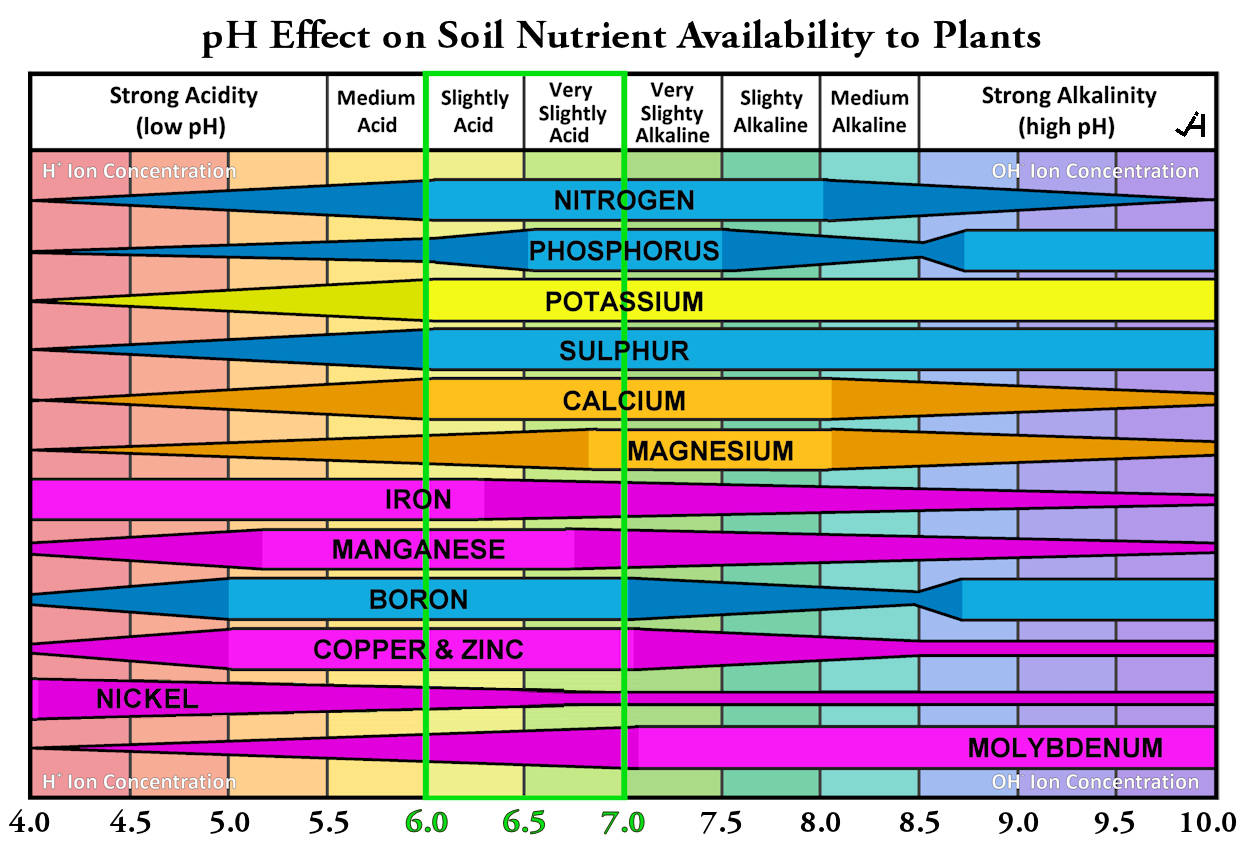
One of the biggest challenges in establishing some trees in Indiana clay soils is high alkalinity and compaction. Soil pH is a measure of the acidity or alkalinity of the soil, measured on a logarithmic scale from 0 to 14. A pH of 7 is neutral; values below 7 indicate increasing acidity, and values above 7 indicate increasing alkalinity.
Soil pH is defined chemically as the negative logarithm of the hydrogen ion (H⁺) concentration in the soil solution. It is a critical indicator of soil health because it governs the availability of nutrients to plants and affects the activity of beneficial soil microorganisms. Acidic soils (typically found in high rainfall areas) have a higher concentration of hydrogen ions. Alkaline (basic) soils (common in arid regions) have a lower concentration of hydrogen ions and a higher concentration of hydroxyl ions (OH⁻).
Optimal Range: Most plants thrive in slightly acidic to neutral soils (pH 6.0 to 7.0), where nutrient availability is highest. During the planning phase of tree selection, an overlooked first step is getting a soil test. Become familiar with the following Soil pH Chart. The range from Acidic to Alkaline soils can influence the success or failure of your tree(s).
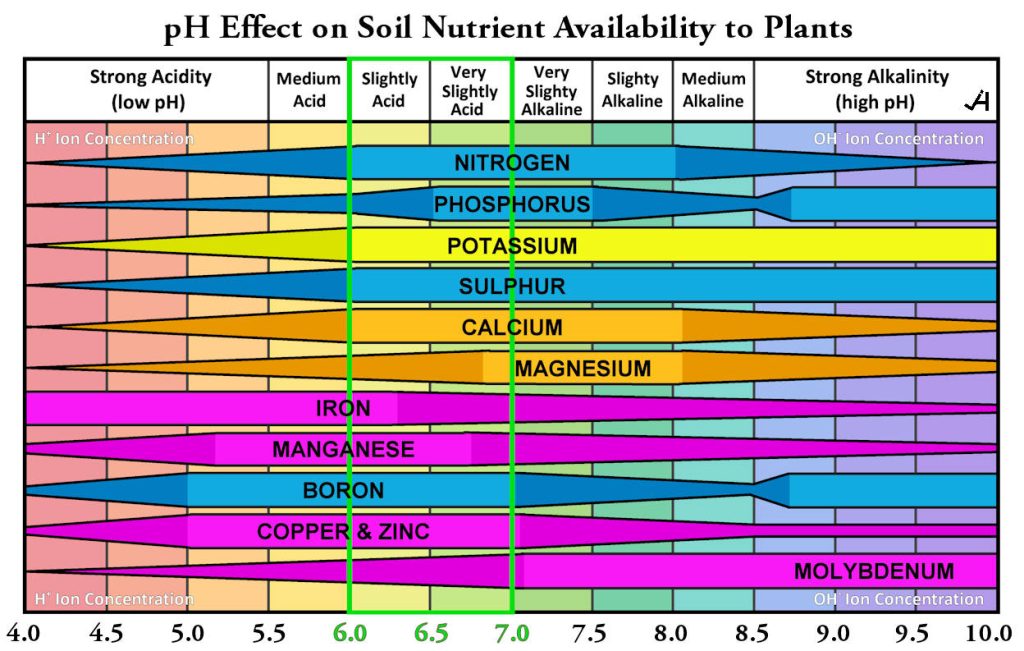
A soil pH chart is a tool that displays the soil pH scale, showing how the acidity or alkalinity of soil affects the availability of plant nutrients and the health of microorganisms.
FUN FACT: DID YOU KNOW?
When it comes to Soil pH Charts and soil guides, many focus on a scale of 4.0 to 10.0 instead of 0 to 14. Why? Because the 4.0 – 10 range encompasses virtually all naturally occurring and agriculturally relevant soil pH values. While the theoretical pH scale in water-based solutions extends from below 0 to above 14 (depending on the concentration), natural soils generally range from an extremely acidic pH of around 3.5 to a very alkaline pH of 10.0. Additionally, soils with a pH value close to 0 or 14 are exceptionally rare in nature. Such extreme conditions would require extremely strong acids or bases, which are not found in typical soil environments. Therefore, charts for gardening and agriculture aim to present the most practical information for plant growth and soil management. Since healthy plant growth is severely limited outside the 4 to 9 range due to nutrient deficiencies or toxicities (e.g., aluminum toxicity at low pH), focusing on the 0-10 or 4-10 range is sufficient for most practical purposes. NOW YOU KNOW!
This DID YOU KNOW? is based on an online article by Guodong “David” Liu and Edward Hanlon (Publication #HS1207 (March 2024), IFAS Extension)
After a laboratory analysis, a soil test report will typically show specific soil nutrient content, soluble salts, and pH level.
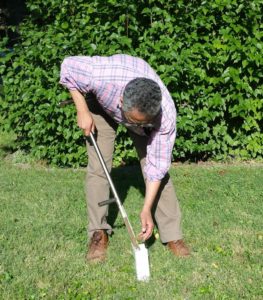
Collecting soil samples for lab analysis is an important step before selecting trees for planting. NOTE: Typically, standard soil tests do not analyze for contaminants, such as bacteria, mold, fungi, herbicides, etc. Therefore, if soil contamination is a concern (say, for example, bacterial problems associated with Crown Gall disease, which affects roses, euonymus plants, willows, etc.), then more advanced analysis is needed, and that would require the help of a microbial services laboratory, which may charge a significantly higher lab processing fee.
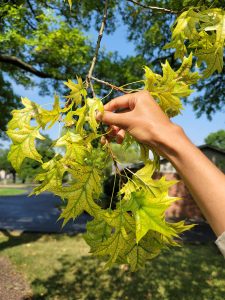
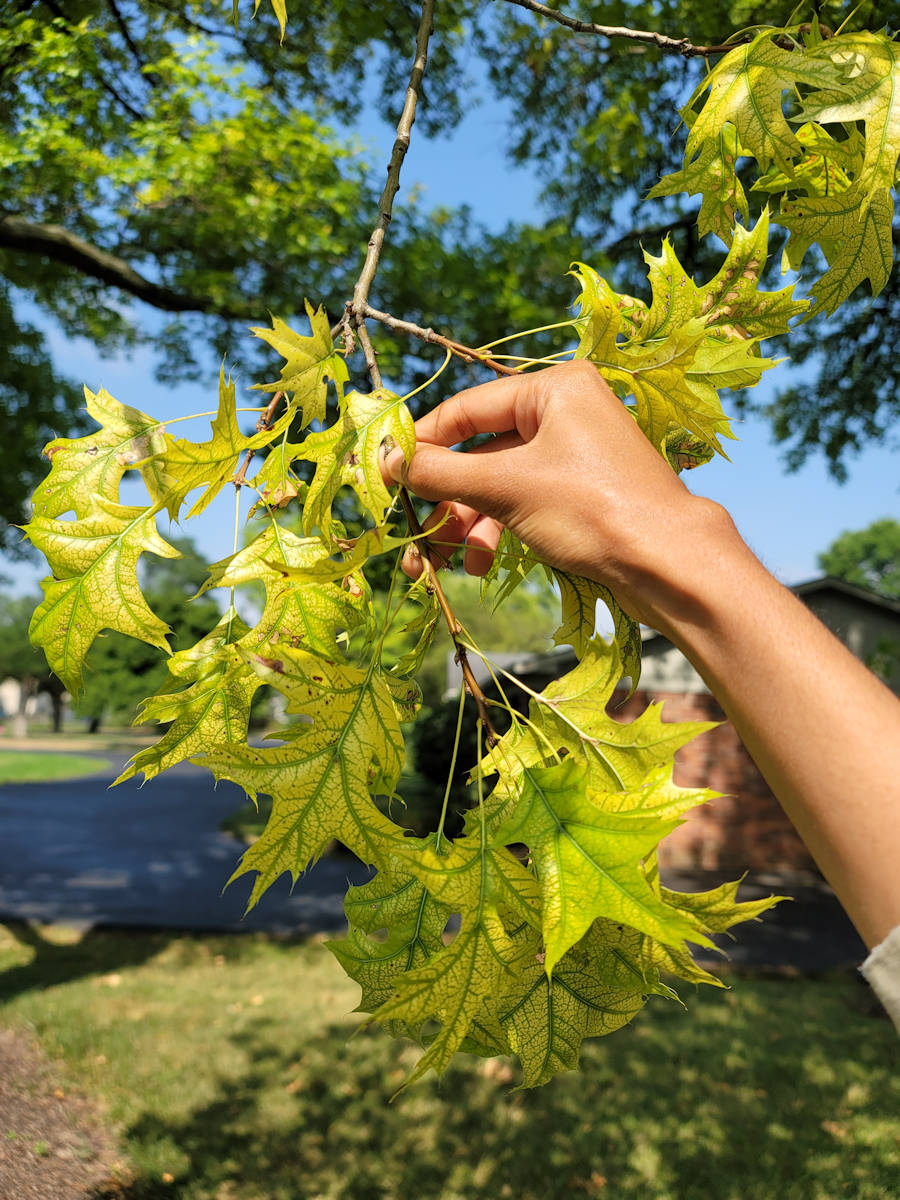
Example of Iron Chlorosis in Oak Tree. When foliage lacks normal spring and summer coloration and displays pale or yellowish tones rather than green, it may be due to a nutrient deficiency condition known as Chlorosis.
Chlorosis is the yellowing of leaves in trees due to a lack of chlorophyll, which is caused by a deficiency in essential nutrients like iron, magnesium, or nitrogen. This impairs photosynthesis, leading to symptoms like pale green or yellowing leaves, and can progress to leaf scorching, twig dieback, and eventual tree death if untreated. The most prominent sign is leaves turning a pale green or yellow, often with darker green veins (interveinal chlorosis).
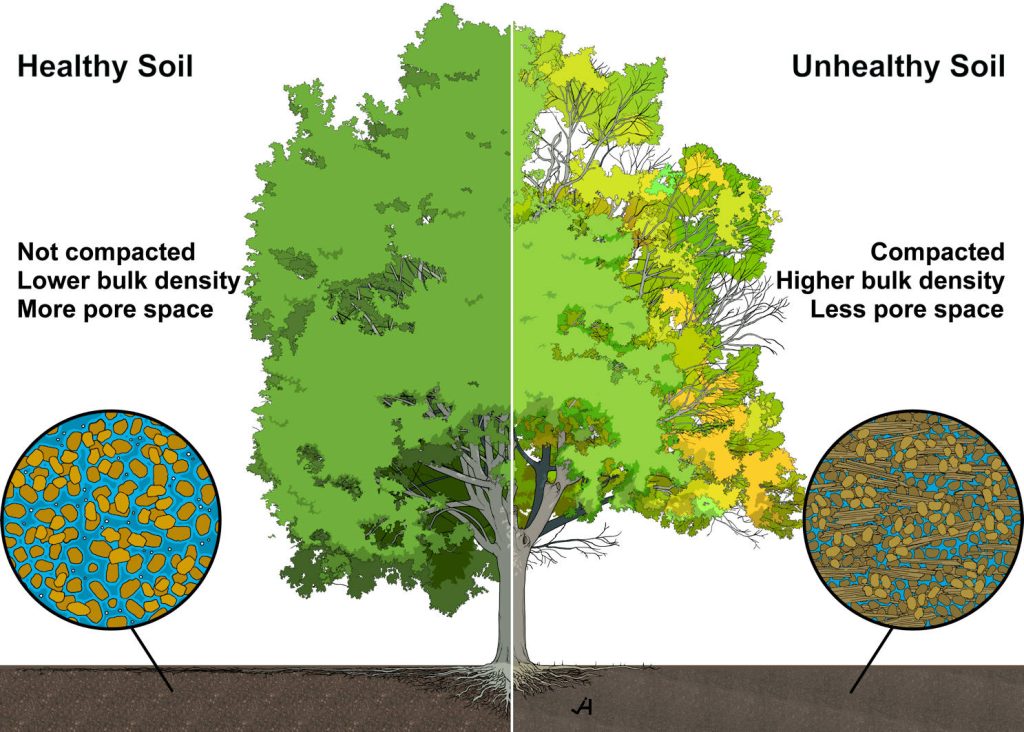
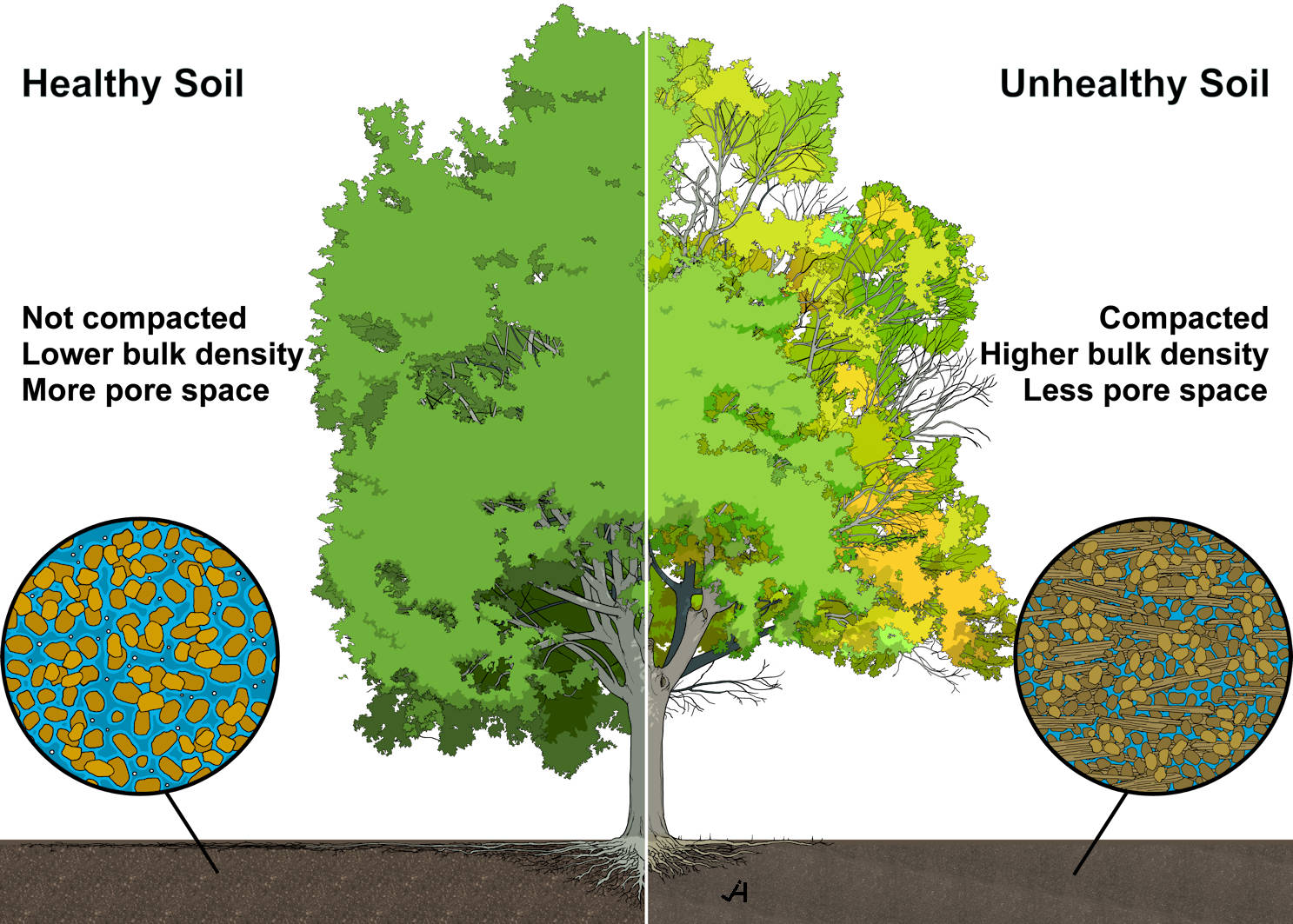
Compacted soil can restrict root function and nutrient uptake. Common Nutrient Deficiencies and Contributing Factors Associated with Chlorosis:
- Iron deficiency: Typically causes interveinal chlorosis, starting on younger leaves, as the veins remain green while the tissue between them turns yellow.
- Nitrogen deficiency: Tends to cause older leaves to yellow uniformly.
- Magnesium deficiency: Often shows yellowing between the veins but may also turn the leaves bronzy-orange.
- High soil pH: Alkaline soils can make it difficult for trees to absorb iron and other nutrients, even if they are present.
- Poor soil conditions: Compacted or waterlogged soil can restrict root function and nutrient uptake.
- Root damage: Physical damage to roots from construction or disease can also cause chlorosis.
How a SOIL ANALYSIS REPORT Can Help You
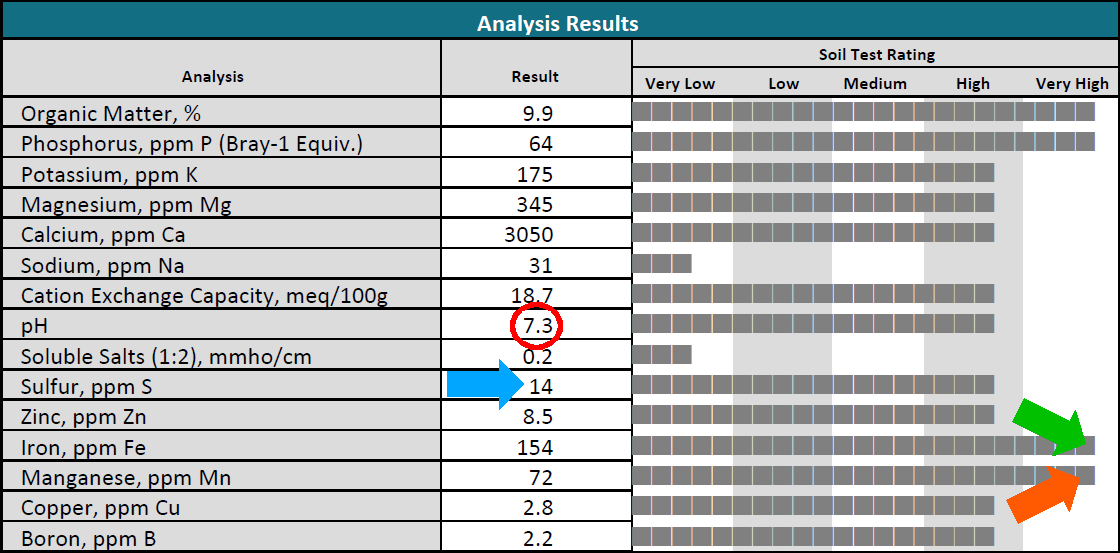
- This is where the pH rating may be an important factor to note. What is the soil pH rating? Is it too low, too high, or just about right? In reference to the aforementioned Soil pH Chart, the optimal pH range for most plants on a rating scale from 0 to 14 is between 6.0 to 7.0, with 7.0 being neutral. In the example Analysis Results report below, the pH level of the soil sample submitted is 7.3 (circled in red) and considered high.
- The soil texture (or percentage of sand, silt, or clay) determines how much Sulfur (S) content is needed to lower the pH. When soil pH is high and Sulfur is low or insufficient to reduce the alkalinity of the soil, nutrient absorption by the roots of some trees may decrease. In the soil sample below, the Sulfur reading (in parts per million (ppm); see blue arrow) is 14 ppm. This indicates that Sulfur is high, but since the pH is also high. This could indicate a problem related to soil texture.
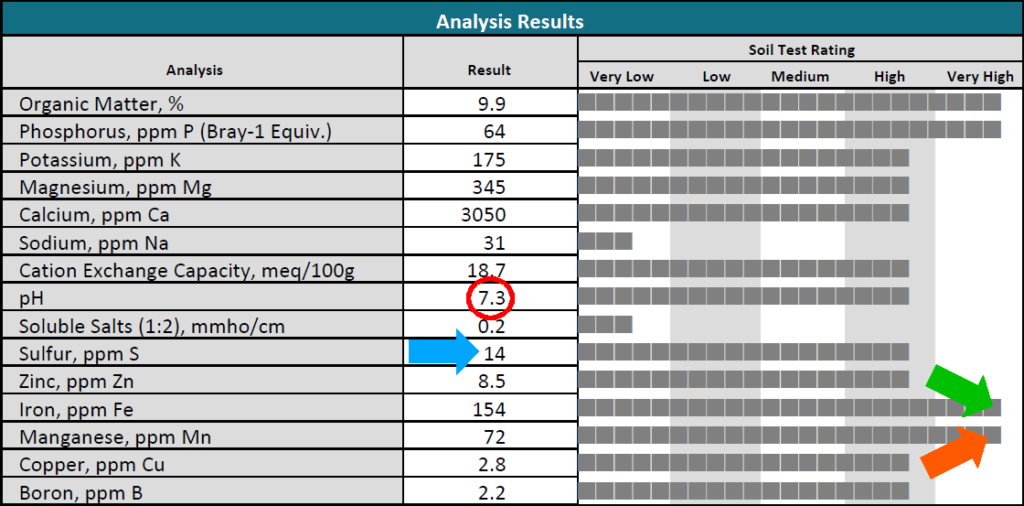
Soil Analysis Results sample - Should you add more Iron (Fe) into the soil for your yellowing Pin Oak (or River Birch or White Pine, etc.) to help green up the foliage? Well, if the soil in this sample report above came from the property with those trees, we can see that the soil already has a very high concentration of Iron (see green arrow) at 154 ppm. Therefore, additional Iron is likely unnecessary.
- The same may apply if we were trying to resolve a Manganese (Mn) deficiency in a yellowing maple tree to help restore summer season color to the foliage. According to the Analysis Results example above, Manganese is 72 ppm is considered very high. (See orange arrow)
HOW TO GET YOUR SOIL TESTED
We highly recommend c
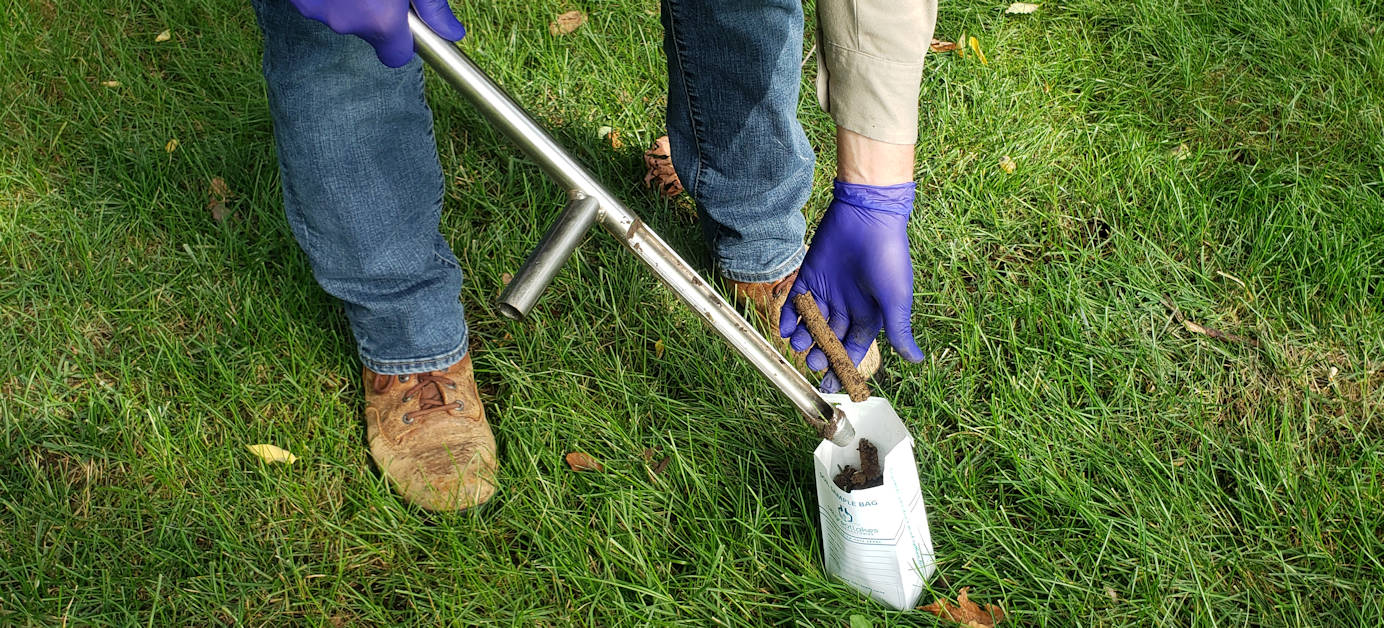
ollecting soil samples for certified soil diagnostic laboratory analysis so that you can use the soil test results to aid you in making better tree choices that will prosper in your landscape. NOTE: You will not need to repeat the soil testing process unless significant soil changes have occurred, like regrading or topdressing in your lawn or landscape. The laboratory we use, for example, A&L Great Lakes Laboratories, is located in Fort Wayne, IN. We rely on them to deliver comprehensive soil analysis for client trees that suggest soil-related symptoms or when they desire to plant new trees.
Getting your soil tested is something you can do yourself:
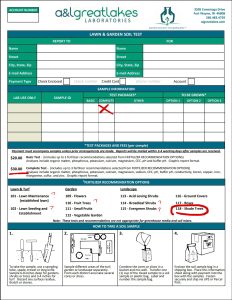
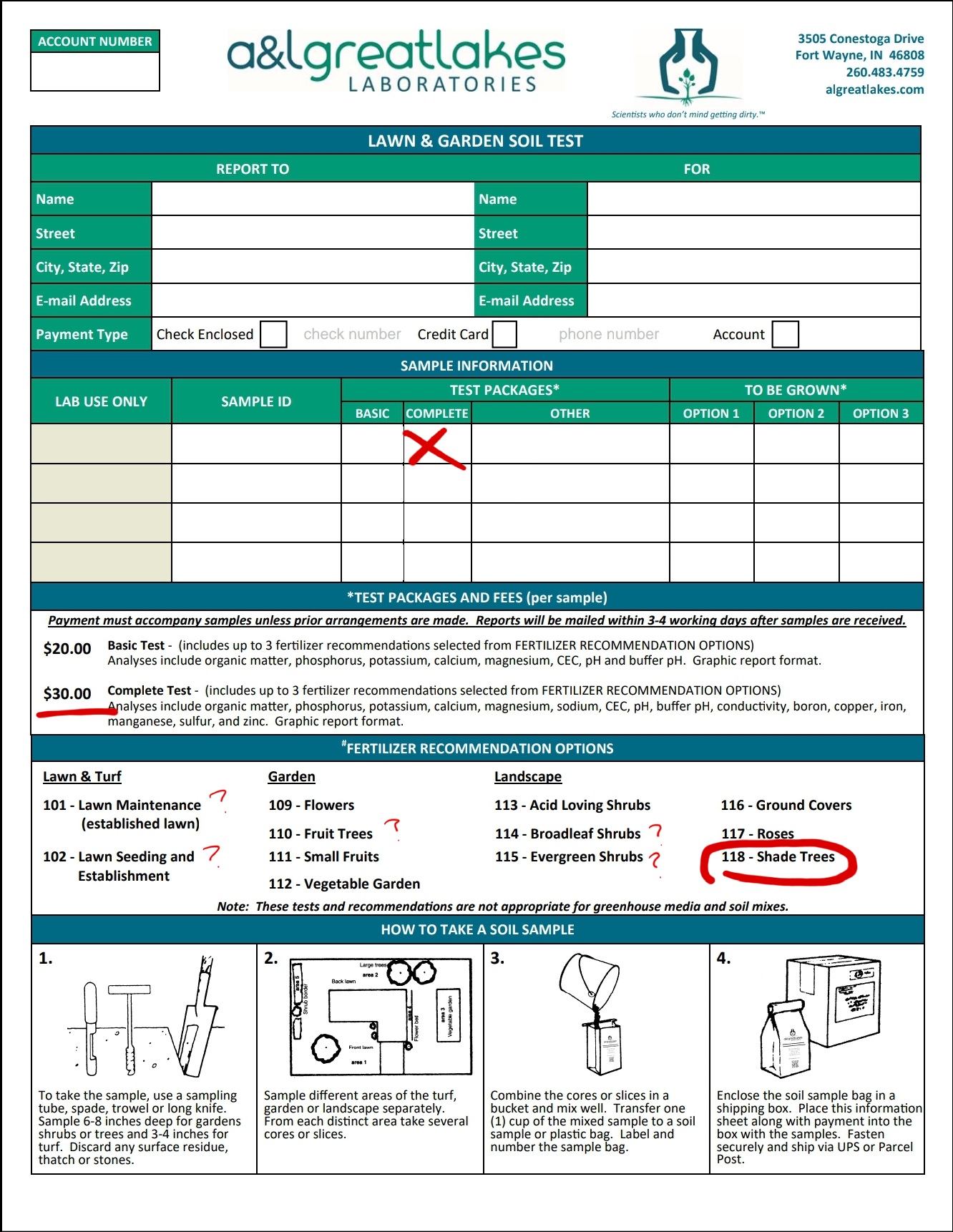
Sample submittal form to accompany soil samples. - Use the “you can do yourself” link above and print and fill out the soil submittal form.
- Choose the “Soil – Home & Garden” form on their webpage. (The actual soil sample submittal form contains instructions at the bottom of the form on how to collect & submit soil samples.)
- On the form, be sure to select to have a COMPLETE test, which costs $30.00. (See sample submittal form.)
- Choose 3 fertilizer recommendations. Since trees are always an important factor, ensure “118-Shade Trees” is circled and then choose two other categories, such as “110-Fruit Trees” and “115-Evergreen Shrubs”. (The latter two will cover you in case you plan to plant flowering crabapple trees or evergreen trees/shrubs in the future, but select whatever applies. Your soil will not change that much over the next several years, unless you have significant soil changes performed, as mentioned earlier.)
- After the lab testing is completed, they will email you a copy of their analysis report. If you retain an arborist’s PHC services, then you should make a copy of this report available for their records as well. The more information you provide, the better an arborist can help diagnose problems in your landscape!
Note: If you need soil sample collection supplies like a submittal bag, shipping box, etc., they sell these supplies on their site as well. We use USPS to ship our samples to the lab, but you can use whatever delivery service is appropriate.
With soil test results in hand… ARE YOU READY TO PLANT A TREE?
Follow this link
 HOW TO PLANT A TREE!
Related articles:
- Soil and Water pH – Part 1: What is pH? https://ucnfa.ucdavis.edu/news/soil-and-water-ph
- Soil and Water pH – Part 2: How is nutrient availability affected by pH? https://ucnfa.ucdavis.edu/news/get-cultured-part-2-soil-and-water-ph
- Soil and Water pH – Part 3: How do fertilizers affect pH? https://ucnfa.ucdavis.edu/news/soil-and-water-ph-part-3
- Understanding and Applying Chelated Fertilizers Effectively Based on Soil pH http://edis.ifas.ufl.edu/hs1208
- Chelates – What are they and What do they do? (PDF) https://www.gchydro.com/pdf/GreenCoast%20Hydroponics-IS-NUT-0413-The%20Science%20Behind%20Chelates.pdf
- Predicting Soluble Nickel in Soils Using Soil Properties and Total Nickel https://journals.plos.org/plosone/article?id=10.1371/journal.pone.0133920
FUN FACT: DID YOU KNOW?
Chlorine and Nickel are often not explicitly represented on typical, simplified soil pH charts because their availability is predictable from the behavior of other nutrients already on the chart, or their concentrations are usually sufficient across most pH ranges. Unlike many cations whose availability changes drastically with pH due to precipitation at higher pH levels, chloride is highly mobile in the soil solution, and its availability is generally not a limiting factor or strongly tied to pH fluctuations in the same way as other nutrients are. Its behavior is similar to other anions like nitrate (NO₃⁻), which also do not typically appear on these charts for the same reason. Nickel availability in the soil is similar to other divalent cations like copper (Cu), zinc (Zn), iron (Fe), and manganese (Mn). These metals become less available at high pH and more available at low pH, to the point of potential toxicity. Since these other metals are already on the chart to illustrate this general trend for micronutrient metal cations, a separate line for nickel is often considered redundant in a simplified visual representation. NOW YOU KNOW!
This DID YOU KNOW? is based on an online article by Guodong “David” Liu and Edward Hanlon (Publication #HS1207 (March 2024), IFAS Extension)
- Basic Nutrients (Basic Macronutrients)
-
What Does a Tree Think of Pruning?
Guiding young and medium-aged trees to develop good branch architecture is key to sustainable tree plantings. The most common method of training and developing healthy growth is by means of proper pruning.
But, have you ever wondered how pruning affects a tree?
It’s not merely the removal of a broken or diseased or undesirable limb. Pruning not only changes a tree’s physical structure, for better or worse, but it also undergoes biological effects, which can have long-lasting affects on its future growth and development. Who knew, right?
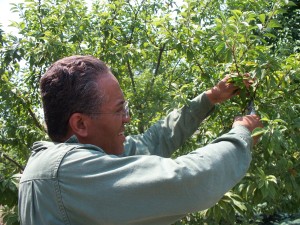
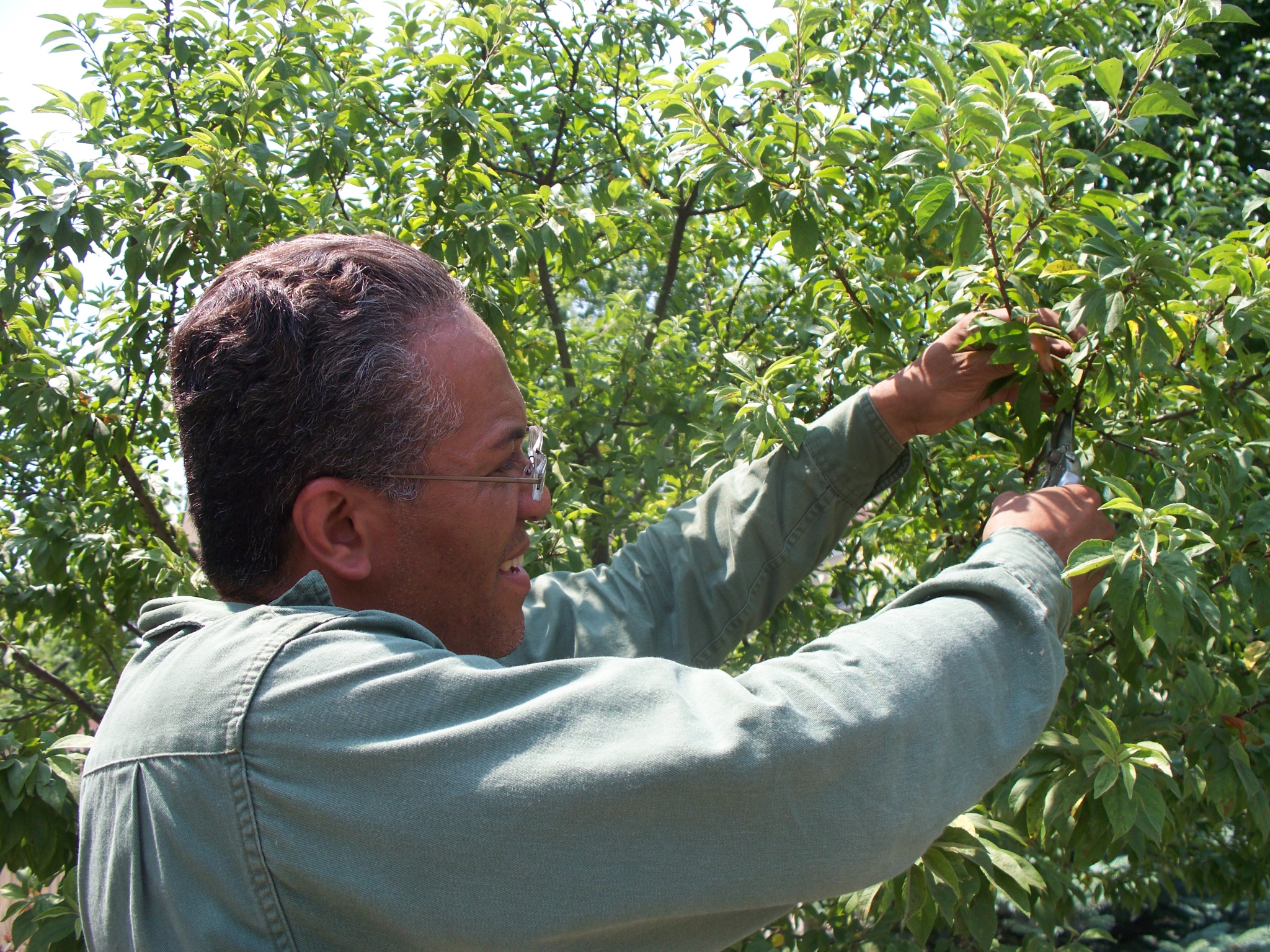
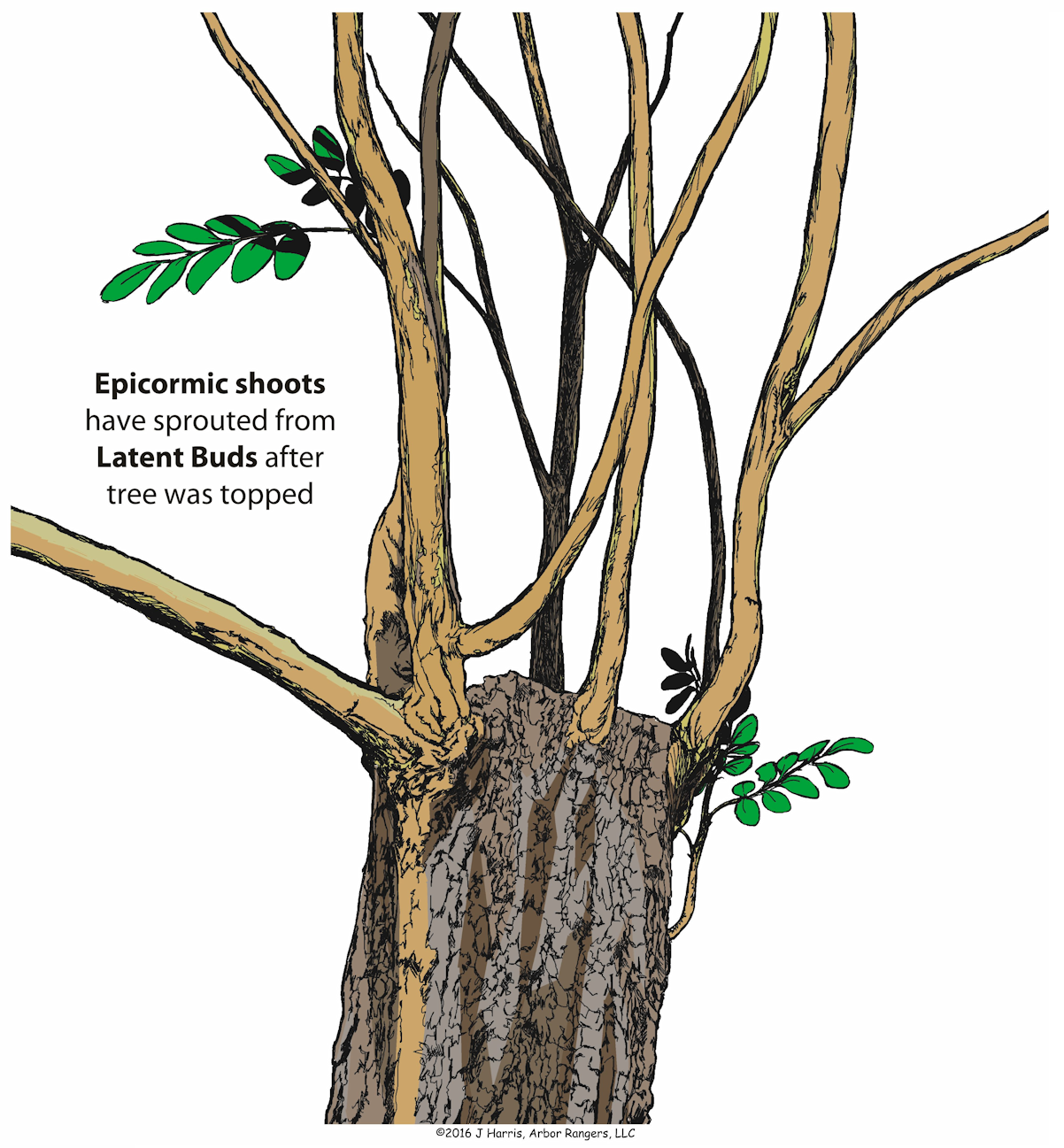
We prune trees to remove broken or diseased or undesirable limbs, but have you ever wondered, “What do tree think?” Can pruning affect a tree biologically? What affect could Jeff’s pruning this tree (pictured above) have on its future growth and development? To learn more on how proper (or improper) pruning can impact your trees and when is the best time to prune, read the new publication: “Tree Pruning: What Do Trees Think?” (FNR-534-W Feburay 2017) by Lindsey Purcell (Urban Forestry Specialist, Purdue University).
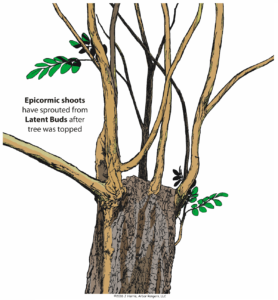
Epicormic shoots have developed from latent buds after this tree was topped. Topping trees is bad for a trees long-term health and not considered a proper pruning method. Be sure to also check out his related book “Tree Pruning Essentials“ (FNR-506-W July 2017).
-
How To Plant A Tree
[Last update: November 2025]
Quick Links to Topics Covered in This Article:
INTRODUCTION • Before, During, and After Tree Planting
Location, Location, Location • Tree Selection
Proper Planting • Good Cultural Practices
High pH Indiana Soils: What Trees Can I Plant? • High pH Indiana Soils: Trees to AVOID
INTRODUCTION: Have you ever wondered, “What is the proper way to plant a tree?” and does it really matter?
Sometimes, it’s hard to imagine the “future tree” it has the potential to become, for example, how tall it will grow, how much shade it will produce, etc.
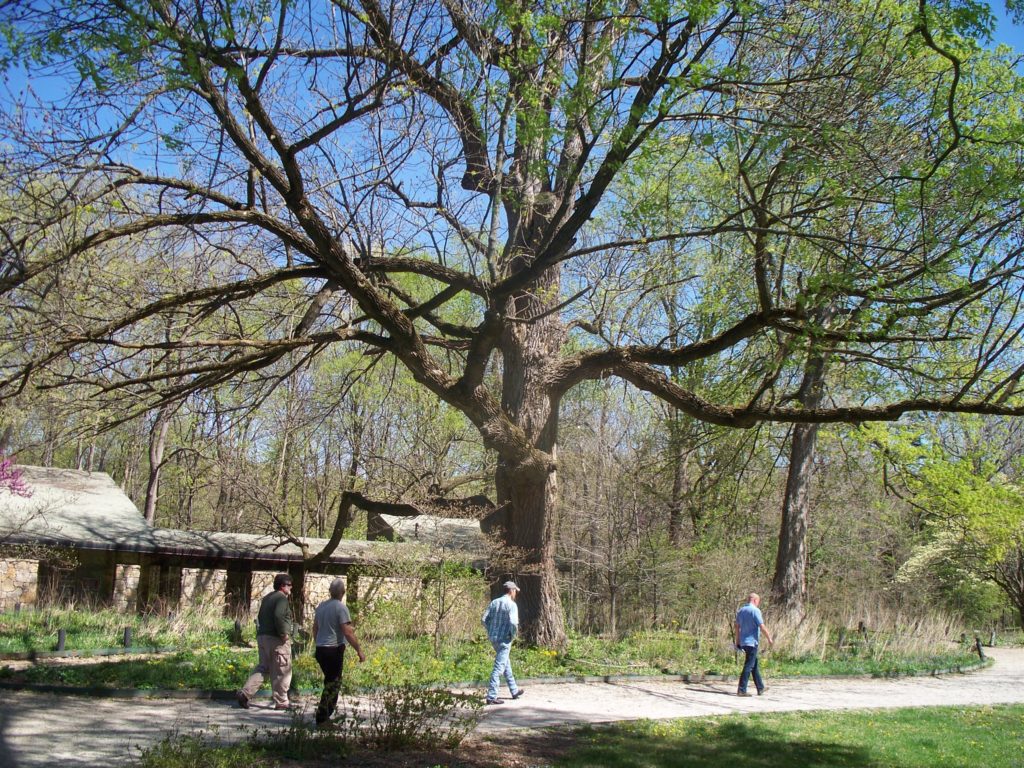
200-yr-old White Ash behind Holliday Park Nature Center (Indianapolis) It’s kind of like buying a cute little puppy. It’s small, -doesn’t take up much room, and did we mention it’s cute?!! Before you realize it, it becomes a larger dog that eats more, poops more, and takes up more space. You still love your dog, but over time, your responsibilities in maintaining your pet have increased. You do more things to keep it happy, well-fed, healthy, and comfortable. Similarly, the change over time in addressing the needs of your trees will grow!
If you are thinking about planting one (or more) trees, how will you keep them “happy, well-fed, healthy, and comfortable?”
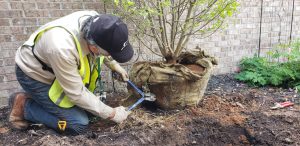
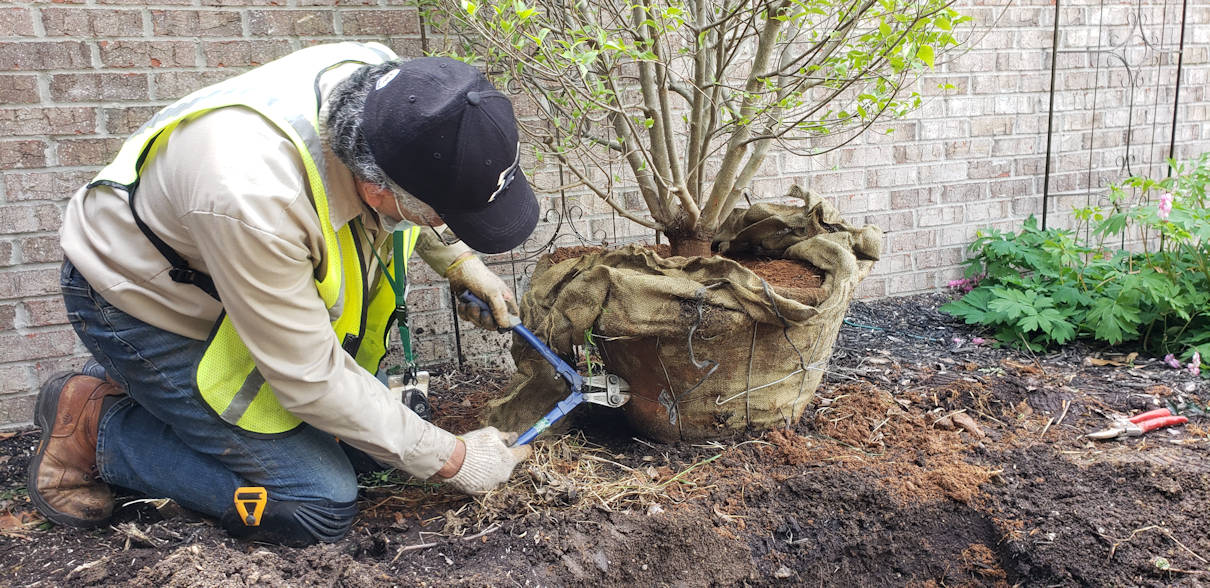
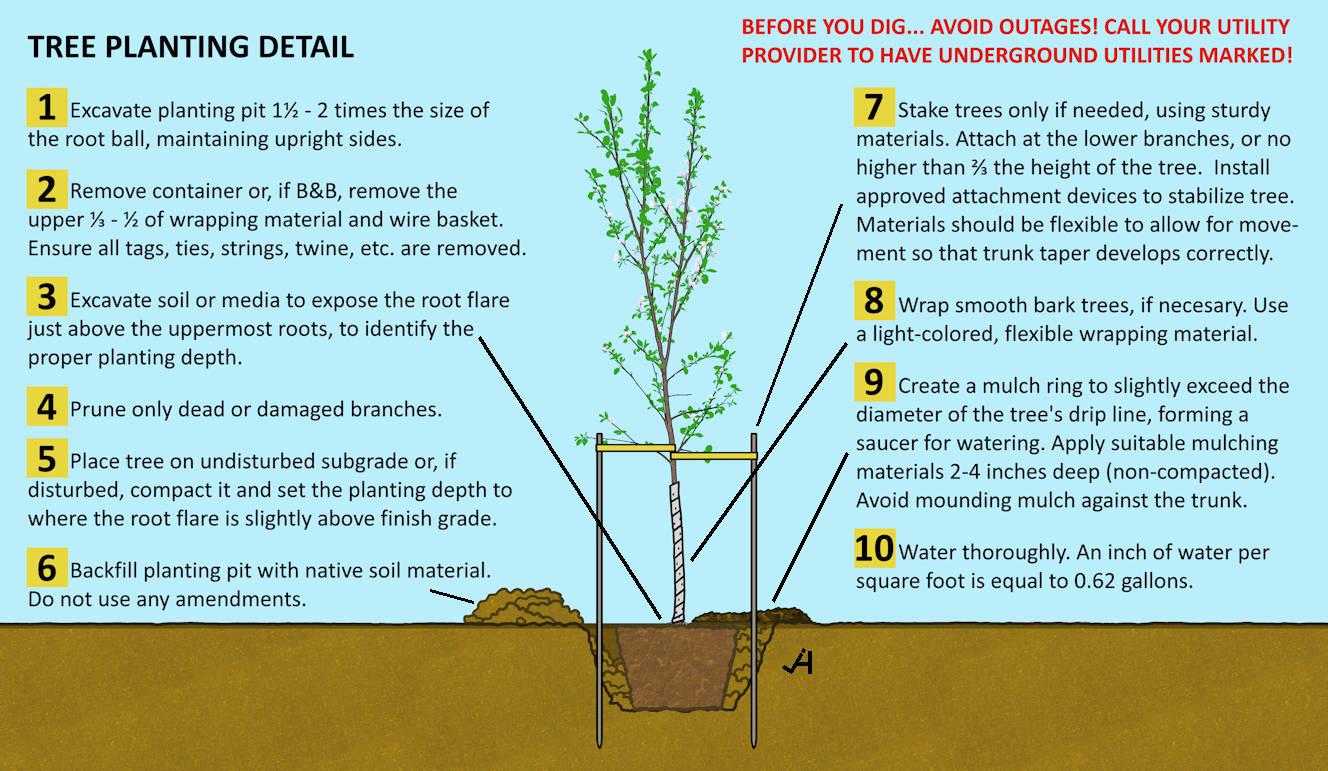
After removing excess soil around the trunk and checking for girdling roots, the rootball transport materials (twine, upper third to half of burlap and wire basket) are removed. First, you have to plan for it! Why do you want to plant a tree? Are you planting it yourself, with family or friends, or for-hire? Have you had the soil tested? What kind of tree do you want? Are nearby utility lines a concern? From where will you purchase it? When is the best time to plant a tree? (See “Planting New Trees – Spring, Fall, or When?”) How much space is available for one? Will it hide your property as a natural barrier (a.k.a., privacy fence)? Will it kill your lawn from too much shade? Will you have time to care for its needs properly? Etc.
Yes… There is much to consider before planting a tree, but don’t let that stop you or discourage your desire to own one! Just keep in mind that for the best success in owning a tree and maximizing your enjoyment for decades to come, they do require your attention at times while doing their thing. Take some time to learn about them and seek expert advice before spending your hard-earned cash. Not every tree will grow well in every location. There’s a ‘right tree for the right place!’
BEFORE, DURING, and AFTER TREE PLANTING
We’ve put together a list of reminders on what we believe to be the most important things that MUST happen to provide a new tree the best chance for a long, productive life in its new home:
SOIL TESTING:
If you haven’t done so already, get a soil test FIRST to get an overview of your planting site’s soil condition. Even native trees can struggle in the wrong soil conditions. (See list of Indiana trees that tolerate high alkaline soil.)
Typically, when we order a soil analysis, we ask the laboratory to test for the following things: organic matter, available Phosphorus, exchangeable Potassium, Magnesium, Calcium, soil pH, buffer pH, cation exchange capacity (CEC), percent base saturation of cation element, soluble salts and Sodium, along with Sulfur, Zinc, Manganese, Iron, Copper, and Boron
While we may not need to use all of this data in every planting instance, it’s good data to have on hand. Our focus is primarily on existing trees on a property and potential new tree plantings, but not necessarily the turfgrass. (We leave that to the lawn care guys!😉) However, it works in the best interests of the property owner and their trees when arborists and lawn care providers work in harmony with each other to avoid misaligned treatments!
NOTE: You will not need to repeat the soil testing process unless significant soil changes have occurred, like regrading or topdressing in your lawn or landscape.
LOCATION, LOCATION, LOCATION:
Choose locations on your property that are suitable for new trees. These planting sites should provide adequate sunlight and space before planting.VERY IMPORTANT: You’ve probably heard or seen the expression, “Right tree, right place.” Before setting your heart on a tree species, be sure that it will be small enough or large enough for the site you wish to plant it into. Always research a tree’s growth potential statistics. How tall could this species get? How wide? Is it prone to surface roots? etc. Avoid trees that could grow tall enough to affect overhead power lines or that could obstruct traffic signs or block utility access points and right-of-ways. The wrong tree planted in the wrong place will likely result in conflicts and extra expenses for you in the future, including removal.
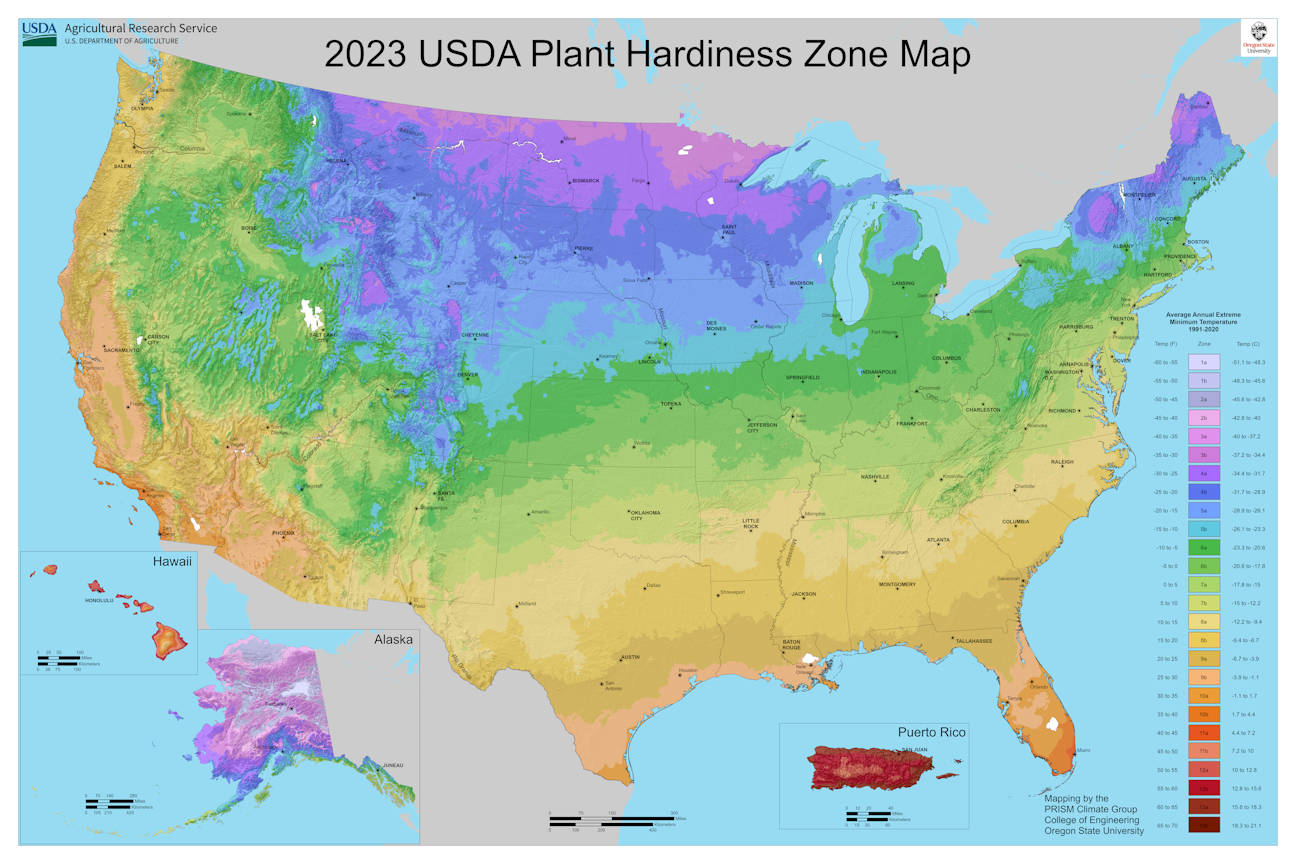
With your soil test results in hand and an ideal planting spot picked out, select a tree species that should do well at that location. In addition to knowing the soil condition, you need to be aware of your site’s USDA Hardiness Zone (if in Indiana, see the Indiana Hardiness Zone map). They are a guide to which trees can survive your area’s minimum winter temperatures. Choosing a tree within your zone ensures it has the necessary winter hardiness to withstand the cold, preventing damage or death. Conversely, selecting a tree from a zone with colder minimums than your own could lead to winter injury or failure. (See also, Planting New Trees – Spring, Fall, or When?)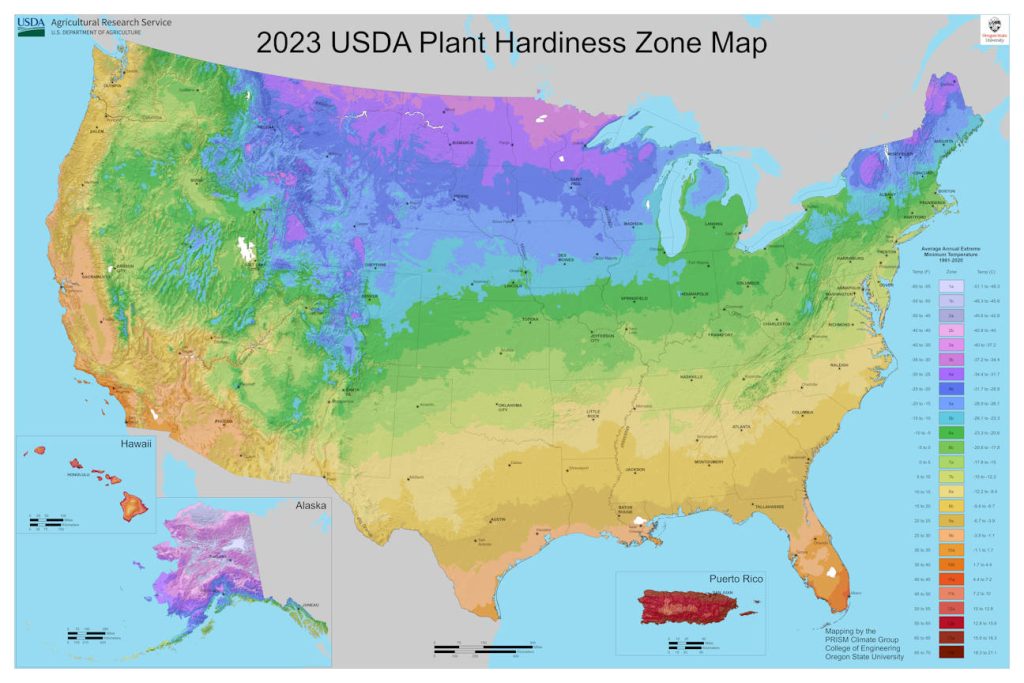
2023 USDA Plant Hardiness Zone Map Also, try to find a species or a species cultivar that shows natural resistance to pests and diseases. the term “resistant” should not be confused with the word “immune” because they are not the same thing. A tree that has resistance to a particular disease, for example, may last longer and potentially avoid getting ill as opposed to another tree of that same species that is more susceptible, but complete immunity can not be guaranteed. All transplanted trees will usually require some form of care and maintenance at some point in their life. Try to select a species that best fits your location and will meet your target maintenance goals and budget.
Be sure to inspect candidate trees before purchasing them to avoid receiving defective or poorly structured trees. Select healthy tree specimens with good form (including roots). The likelihood of higher maintenance is increased substantially by purchasing and planting a tree that already has significant defects or a problematic structure. If you hire someone else to pick your tree(s), you likely won’t be able to inspect the trees before they are purchased. Therefore, if you leave this step to the tree installer, you should include in your service agreement a clause allowing you to exercise your right of refusal if the tree selected is in poor condition or bad form before they plant it and to clearly state a tree replacement warranty period.
Some dealers may try to sell you on a tree by calling their defects “unique” or saying it gives the tree “character,” but beware! True, it does offer uniqueness, but just like a topiary pruned shrub, it will require diligence and dedication to maintain and preserve that “character” you so love. Therefore, use caution. Never blindly buy a tree! Inspect it first or have a qualified arborist inspect it for you.
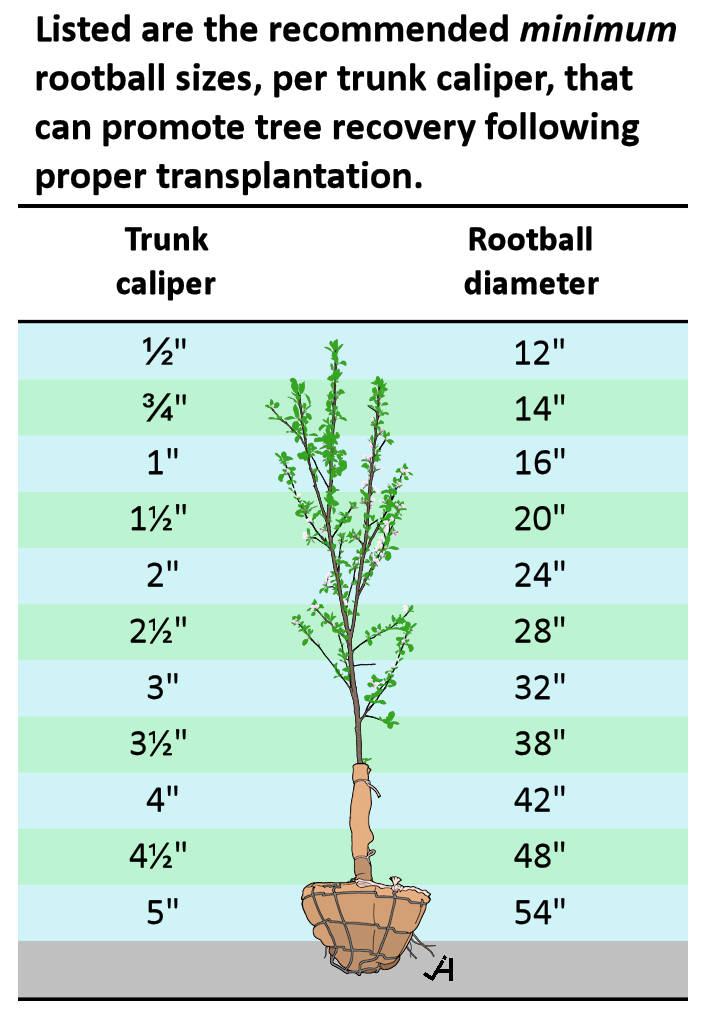
When selecting trees, look to match the caliper size with the rootball diameter. The larger the rootball per trunk caliper will increase the chances for quicker recovery from transplant shock and aid in establishing roots sooner. AVOID PURCHASING INVASIVE SPECIES!!! Purchasing invasive trees is detrimental because they damage local ecosystems, cause economic harm, and may create long-term problems for your own property. These non-native species outcompete native plants for resources and disrupt the food web, negatively impacting wildlife.
PROPER PLANTING:
Plant the tree properly. This should go without saying, but this basic principle is often neglected even by self-claimed “professionals.” It’s not simply a matter of digging a hole and plopping your new tree into the ground. You’ll witness this happen regularly in new residential and commercial developments.Even a great tree specimen can fail if it’s not planted properly. So make sure the tree is properly planted. An installer that ignores or is ignorant of the documented industry guidelines (ANSI A300) is a red flag. Improper planting could result in a tree that can not effectively establish its roots, as well as an expensive future of maintenance, treatments, or removal.Frequently, specific preparation steps for the tree, including rootball inspection & preparation and digging a planting hole at the proper depth & width, are disregarded and skipped. This happens a lot when companies competitively underbid for a planting job, or the property owner doesn’t understand, nor appreciate, the importance of planting a tree properly, or doesn’t want to pay for the extra time and effort to have it planted correctly. This mindset, however, is short-sighted and puts the tree’s longevity at risk. You typically only get one shot at planting a tree correctly! If you skip tree preparation, you may regret it later when preventable problems become apparent years down the road that can’t be fixed. Trees are miraculously designed to adapt, but a poorly planted or sickly tree is more likely to decline and die sooner, eventually breaking down and returning to enrich the soil as food for other plants and organisms. Therefore, if you are planting your new tree with the purpose of it dying prematurely and becoming compost, then this advice on planting it properly for long-term enjoyment won’t apply to you.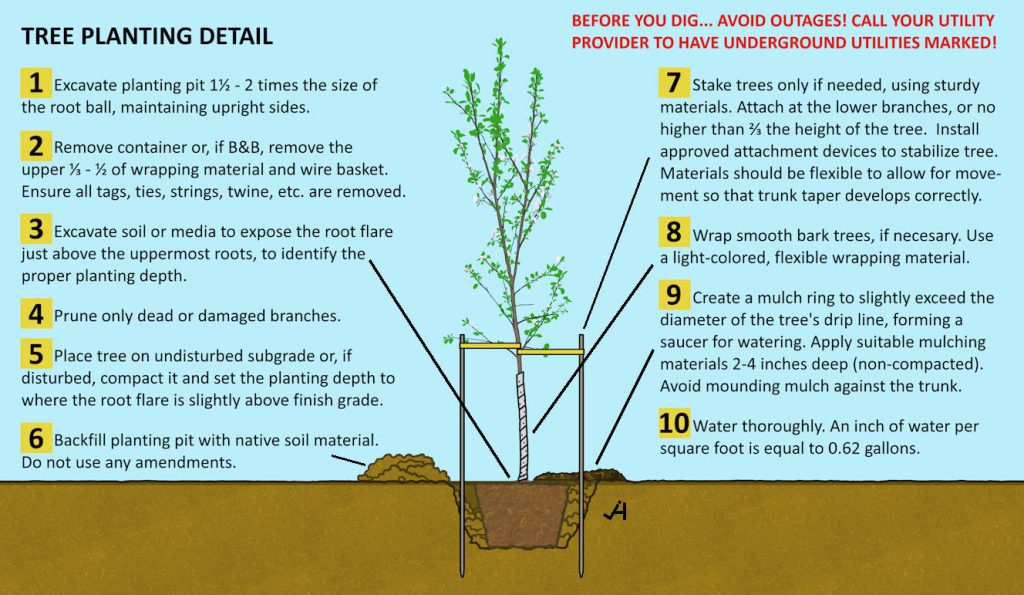
Key steps to successful tree planting. 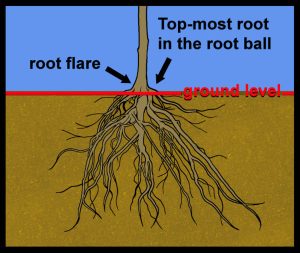
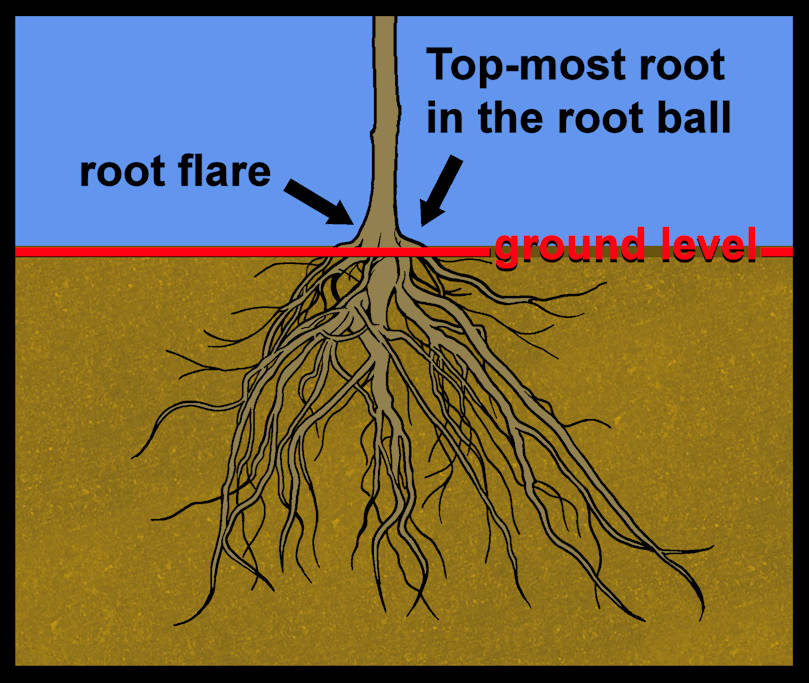
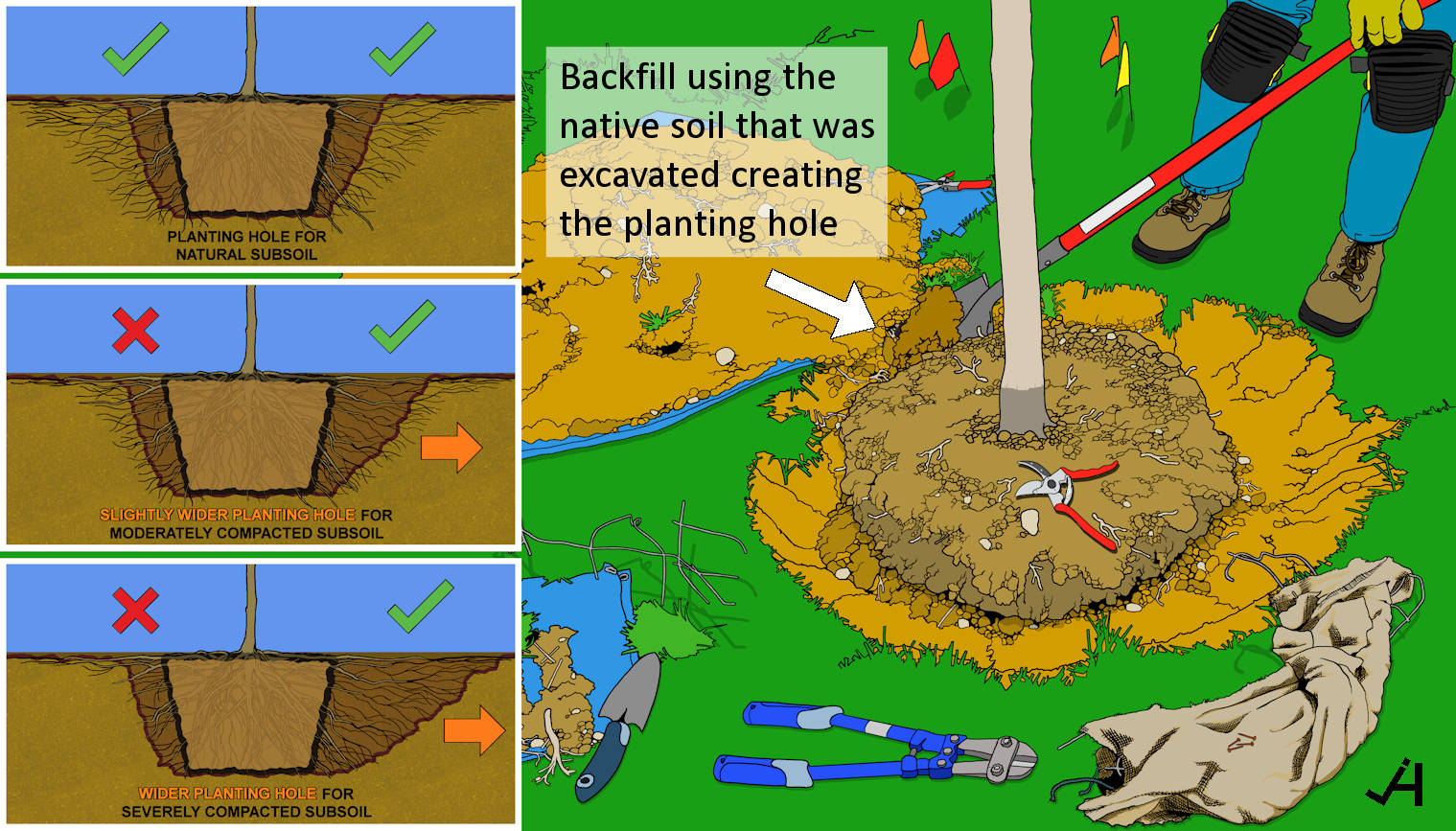
Plant your tree where the root flare (sometimes referred to as trunk flare) is at grade (ground) level. Proper depth is important. Ensure that the tree’s root/trunk flare is planted at grade level. New trees may find it challenging to establish roots in highly compacted soil. Widening your planting hole may be necessary to reduce soil compaction when you backfill the hole.
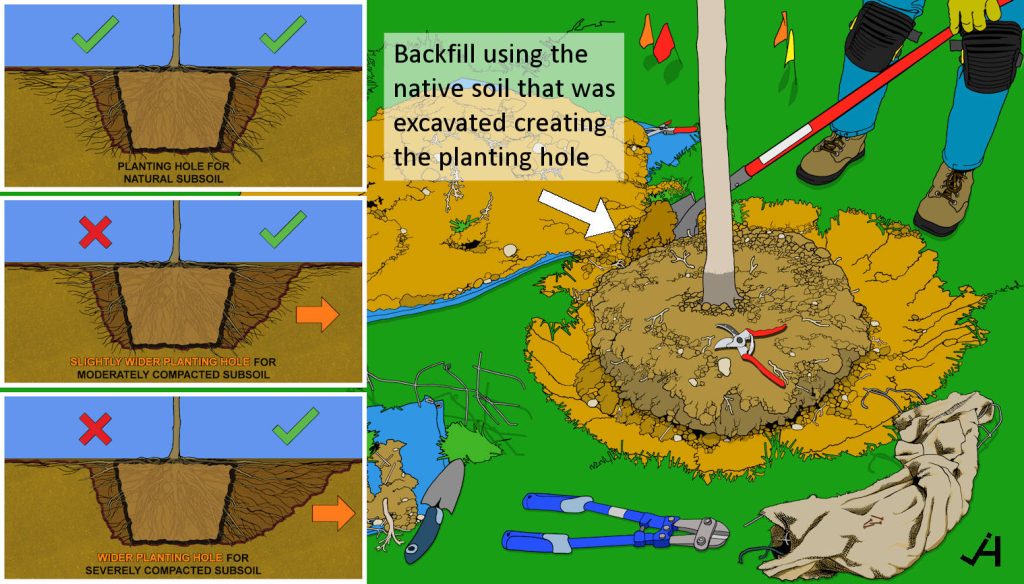
Planting in Compacted Soil will require excavating a wider hole. Break up the backfill soil to make it less compacted and encourage root establishment.
GOOD CULTURAL PRACTICES:
Ensure the tree will be properly cared for to help them overcome transplant shock and establish strong roots. There are A LOT of initiatives to “Save the World” by planting a gazillion trees, but who’s taking care of them? Intending to save costs, the budgets allocated for these ‘green initiatives’ typically only pay for the trees and are planted by volunteer workers. Many of these events omit a program to manage ongoing care after the planting event. As a result, these trees are often not properly managed. Just take a drive and see the dying/dead trees that were planted en masse in prior years during a special Earth Day or Arbor Day celebration or following a widely-publicized urban canopy restoration initiative. Relying on the public, particularly in local impoverished neighborhoods, to care for such trees doesn’t always work out. So, on your property, if you desire to plant new trees that are successful, you will have to plan for their care and use good cultural practices. These practices are fundamental to the tree’s health and survival and are often necessary during the first three years of growth.
What do these practices include?
-
- WATERING YOUR TREES ADEQUATELY: For one, trees need sufficient water to survive. It’s a basic, but an essential requirement. Ensure the tree receives adequate irrigation. Most new trees die due to a lack of sufficient water, either too little or too much. Water is the best first life-saving resource over any treatment!
- MULCHING AROUND YOUR TREES PROPERLY: Trees also need to be protected from mechanical injuries such as mower damage, weed-trimmer damage, etc. This is a common problem that a few lawn mowing professionals neglect to give proper attention to. As far as landscape aesthetics go, if mulch is to be put around your trees it needs to be applied properly to benefit not just “curb appeal” but more importantly, plant health. (If you are unfamiliar with what proper mulching means and why that is important, then consider this a polite wake-up call.)
- PRUNING YOUR TREES PROPERLY: Trees may eventually need some maintenance pruning. However, if pruning is not done properly, it can ruin a tree for life. Bad cuts and even tree topping are constantly being committed by individuals and small businesses who genuinely don’t recognize the harm done to trees, or they top trees deliberately and try to downplay the harm to trees. Hint: Science, research, studies, and evidence prove that trees don’t respond well to being topped and never will.
- SUPPLEMENTING WITH VITAL NUTRIENTS, AS NEEDED: Occasionally, poor soil conditions may require you to intervene and provide your trees with supplemental nutrients, but don’t just apply any fertilizer on it. Use your soil test results to guide you or your arborist in selecting appropriate fertilizers to restore vigor and health to your trees. The soil analysis may reveal your soil already has plenty of certain nutrients, but a lack of vital nutrients can cause low tree vigor and make your tree more susceptible to disease, and also attract additional pest problems.
- MANAGING PESTS AND DISEASES: Addressing pests, particularly exotic pests, and diseases that harm the health and vigor of your trees must be managed. Some trees are more susceptible than others, and it may depend on the species on what problems they may face in the future, and the potential of how detrimental problems could become. Still, when life-threatening health issues arise, these must be addressed promptly, usually with the aid of a qualified, trained & experienced professional. Keep in mind that these professionals are not gods, and there are some diseases that scientific research has yet to cure. Dure or not, ALL trees will eventually die over time from any number of reasons, some undetectable.
Happy planting, and may your efforts prove successful!Native (Indiana) Species (Non-invasive)(For a general list of Indiana native species that includes links for more information on each tree listed below, click TREE-search.-
- Black Maple (Acer nigrum), but beware of Asian Longhorn Beetle!
- Boxelder (Acer negundo), but beware of Asian Longhorn Beetle!
- Northern Catalpa (Catalpa speciosa)
- Common Hackberry (Celtis occidentalis), but beware of Asian Longhorn Beetle!
- Eastern Redbud (Cercis canadensis)
- Yellowwood (Cladrastis kentukea)
- Cockspur Hawthorn (Crataegus crusgalli)
- Downy Hawthorn (Crataegus mollis)
- Green Ash (Fraxinus pennsylvanica), but beware of Emerald Ash Borer and Asian Longhorn Beetle!
- Kentucky Coffeetree (Gymnocladus dioicus)
- Honeylocust (Gleditsia triacanthos)
- Eastern Red Cedar (Juniperus virginiana)
- Crabapple (Malus spp.)
- American Hophornbeam (Ironwood) (Ostrya virginiana)
- American Sycamore (Platanus occidentalis), but beware of Asian Longhorn Beetle!
- Eastern Cottonwood (Populus deltoides), but beware of Asian Longhorn Beetle!
- Bur Oak (Quercus macrocarpa)
- Chinkapin Oak (Quercus muelenberghii)
- Black Locust (Robinia pseudoacacia), though sometimes prolific
- American Linden (Tilia americana)
- Elms (Ulmus spp.) Purchase only Dutch elm disease (DED) resistant hybrids (such as ‘Triumph’, ‘Accolade’, and ‘Commendation’) or DED-tolerant American Elms, but beware of Asian Longhorn Beetle!
Non-native Species (Non-invasive)
-
- Ruby Red Horsechestnut (Aesculus carnea), but beware of Asian Longhorn Beetle!
- Katsura Tree (Cercidiphyllum japonicum), but beware of Asian Longhorn Beetle!
- Hardy Rubber Tree (Eucommia ulmoides)
- Ginkgo (Ginkgo biloba)
- Black Spruce (Picea mariana)
- Silver Linden (Tilia tomentosa)
Trees to AVOID
High soil pH, especially in limestone-rich areas of Indiana, can cause iron and manganese to become chemically unavailable to plants. This can lead to visible problems, most commonly chlorosis, which is the yellowing of leaves and needles, particularly noticeable in the spring. Without the ability to take up these essential nutrients, the trees may experience stunting and poor overall health. (There may exist hybrid cultivars that are more tolerant of high pH soils. Please consult with your nursery representative to see if they stock any such varieties.)-
- Firs (Abies spp.)
- Red Maple (Acer rubrum) requires more acidic conditions than what is typical in Indiana, and high pH can impact its growth, also beware of the Asian Longhorn Beetle! (Update: Redpointe Red Maple (Acer rubrum ‘Frank Jr.’ PP 16769) appears to do fairly well in high pH soils, and so this may be a welcome exception to the rule of ‘trees to avoid’. See more info about this introduced variety here.)
- River Birch (Betula nigra), but beware of Asian Longhorn Beetle!
- Dogwood (Cornus spp.)
- American Sweetgum (Liquidambar styraciflua)
- Spruces (Picea spp.)
- Pines (Pinus spp.), especially white and yellow pines, require a pH of 5.2 to 6.0 and will show signs of stress, like yellowing needles, in higher pH soils
- Pin Oak (Quercus palustris) is often cited as a species that struggles in high pH soils
- Bald Cypress (Taxodium distichum)
- Hemlock (Tsuga)
RESOURCESAside from what we post here on our website, you can find great tips related to planting new trees from the links listed below:-
- ISA “Planting Details and Specifications” https://wwv.isa-arbor.com/education/onlineresources/cadplanningspecifications
- Indiana Department of Natural Resources (INDR/CUF) Community & Urban Forestry https://www.in.gov/dnr/forestry/programs/community-and-urban-forestry/publications/
- Purdue University Publications & Videos:
“Consumer Horticulture: Collecting Soil Samples for Testing” https://mdc.itap.purdue.edu/item.asp?Item_Number=HO-71-W
“Indiana Tree Species Selection Guide”(PDF) https://www.in.gov/dnr/forestry/files/fw-tree-species-selection-guide.pdf
“Tree Planting Part 1: Choosing a Tree” (VIDEO) https://youtu.be/iIaYvtqY7-I
“Tree Planting Part 2: Planting Your Tree” (VIDEO) https://youtu.be/k5rUgd7BmiA
“Tree Installation: Process and Practices” (PDF) https://www.extension.purdue.edu/extmedia/FNR/FNR-433-W.pdf
“Planning the Tree Planting Operation” https://mdc.itap.purdue.edu/item.asp?Item_Number=FNR-223
“Tree Pruning Essentials” https://mdc.itap.purdue.edu/item.asp?Item_Number=FNR-506-W
“Tree Pruning: What Do Trees Think?” https://mdc.itap.purdue.edu/item.asp?Item_Number=FNR-534-W
About our Tree List: We will try our best to keep this list up to date, based on the latest information available, and may modify it periodically to include or exclude species.
Disclaimer: As tree stewards and advocates, we investigate and research plant health care sciences and best management practices that have proven successful in the tree care industry. That said, some of the views, insights, advice, and opinions we post on our website may differ in perspective from other websites or publications sharing similar topics. That’s okay. Science is an evolving practice of discovery and meticulous research that is continually shaping our knowledge and beliefs. We will continue to engage in that research, and where opinions differ, work toward finding an amicable solution whenever possible. We are not always able to monitor changes or revisions made by external websites, so if any of the links used in this article fail, please let us know. Thank you!
One more thing before you plant that new tree in Indiana…

DON’T TAKE CHANCES! Call 8-1-1 BEFORE you dig!
Knowing where underground utility lines are buried before each digging project begins helps to prevent injury, expense, and penalties. The depth of utility lines may vary, and multiple utility lines may exist in one area. Simple digging jobs can damage utility lines and disrupt vital services to an entire neighborhood, harm those who dig, and result in expensive fines and repair costs. Marked lines show those who dig the approximate location of underground lines and help prevent undesired consequences.
-
-
Indiana’s STEM Certified Schools!
The Indiana Department of Education has announced the following STEM Certified Schools which underwent a rigorous application and review process in order to be awarded. While these are some of the first, other schools will be able to build on their accomplishments. Congratulations!
The FIRST Cohort of Schools:
- Zionsville Community Schools: Boone Meadow Elementary, Stonegate Elementary, Eagle Elementary, Pleasant View Elementary, Union Elementary
- Michigan City Area Schools: Lake Hills Elementary
- Warsaw Community Schools: Washington Elementary
- MSD of Lawrence Township: Skiles Test Elementary, Belzer Middle School, and McKenzie Center for Innovation and Technology
- Maconaquah School Corporation: Maconaquah Middle School
- MSD of Warren Township: Walker Career Center
The SECOND Cohort of Schools:
- The Career Academy of South Bend
- Grandview Elementary-Bloomington
- Indian Creek Elementary Magnet School of STEM-MSD Lawrence TWP
- Lafayette Sunnyside Intermediate Schools-Lafayette
- Madison Primary Center-South Bend
- Area 31 Career Center-MSD Wayne TWP
- Maple Crest Middle School – Kokomo
- New Tech Institute – Evansville
- Southern Indiana Career and Technical Center – Evansville
Congratulations to the following schools for achieving a Full STEM Certified Program (School within a School Model)!
- The STEM Academy at Penn High School – Mishawaka
Want To Learn More About Getting Your School STEM Certified?
Review the online webinar HERE. -
Help the Urban Forest in Carmel
Nature Explore Outdoor Classroom is being planned for Goddard School
A special invitation has been extended to participate in a project to bring more trees and other greenery into Carmel’s urban forest, reduce hardscape, and help create future generations of tree planters and environmental stewards.
As a key first step in creating this nature-rich learning environment, a two-hour design consultation will be held on December 28 & 29, 2016. Representatives from urban forest organizations are invited to attend on those days and offer their expertise.
If you are unfamiliar with the Nature Explore program, you are encouraged to view their introductory video at http://youtu.be/Ptxhw8e4l3o.
Nature Explore’s landscape architect/educator design team, together with the program’s stakeholders, will design an effective learning environment for the children.
As Dan Lambe, Arbor Day Foundation president has said, “Bringing together the urban forestry and early childhood communities to create Nature Explore Classrooms is a great way to grow both urban forests and future tree planters.”
The design team would welcome whatever help and expertise you might provide. In other communities, stakeholders have advised on the best trees and shrubs to plant, and on tree-care issues. Some have proposed ways to obtain free or reduced-price trees and shrubs, sources of natural materials such as logs, or connections to community volunteers. However you might be able to help, we would appreciate it.
The design consultation will be held at:
Goddard School – West Carmel
10445 Commerce Drive
Carmel, IN 46032
Wednesday, December 28 from 9-11 am
Thursday, December 29 from noon-2 pmTo register your interest in attending, please email Kelsey Moline (Nature Explore Classroom Designer/Project Coordinator) at ke*****@***********re.org and let her know if you or a representative from your organization will be able to participate in the design consultation. If you have any questions, give her a call at the phone number below.
“Nature Explore is a collaborative program of the Arbor Day Foundation and Dimensions Educational Research Foundation. You and your peers all over America have done a superb job of advancing green initiatives. Your assistance in creating the Nature Explore Classroom will help insure that this great tradition continues, and that today’s children grow up to be the next generation of caring tree planters,” says Kelsey Moline.
Nature Explore
www.natureexplore.org
1010 Lincoln Mall, Suite 103
Lincoln, NE 68508
P: 402-467-6112 x118 | D: 402-474-7956 -
Hover Flies and Sweat Bees, Oh My!
So… you’re outside trying to enjoy your trees and then almost immediately you begin to attract the attention of those tiny, hovering, flying “things” that look like tiny bees! It seems to get worse because they tend to like landing on your sweaty arms and hands and shoulders and… Just what are these? Bees? Wasps? Flies? Drones? Aliens?!!?

Clive Jones Checkout our post on Facebook where we point you to the answers:
or go to: https://ag.purdue.edu/btny/ppdl/Pages/HOT2016/hot08092016.aspx
-
April Debut Issue of New Arbor Ranger’s “Brainy Series”
Arbor Rangers ™ has a NEW logo for its new “BRAINY Series”. This new series will be all about puzzles that include mazes, word searches, crosswords, rebuses, etc. that are designed to get you to THINK about trees!

The NEW Arbor Rangers™ “Brainy Series” Logo We’ve combined some of our favorite past puzzles into a new 8-page PDF! This issue will introduce our new “Brainy Series” specifically devoted to word game puzzles and other fun leisurely activities to get you THINKING about trees! Enjoy!

Arbor Rangers™ Brainy Series™ Activity pages promo issue cover -
2016 IUFC Arbor Day Poster Contest for Fifth Graders!
The Indiana Urban Forest Council’s Annual 5th Grade Arbor Day Poster Contest has officially launched!
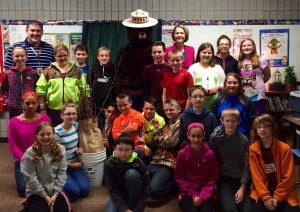
Arbor Day Poster Contest Celebration at Easton Polaski School What must a winning poster include?
- Poster contest theme
- Accurate tree facts
- Visual appeal
Registration
To register, click on this REGISTRATION link.
Poster Contest Deadline
Winning posters from each school must be received by their corresponding Regional Judge no later than Saturday, March 26, 2016 to qualify. Please see complete Contest Rules & Regional Judges info.
Once your school has a winner, be sure to fill out and attach this form, before submitting it.
Best wishes to all participating 5th Grade educators and their students!